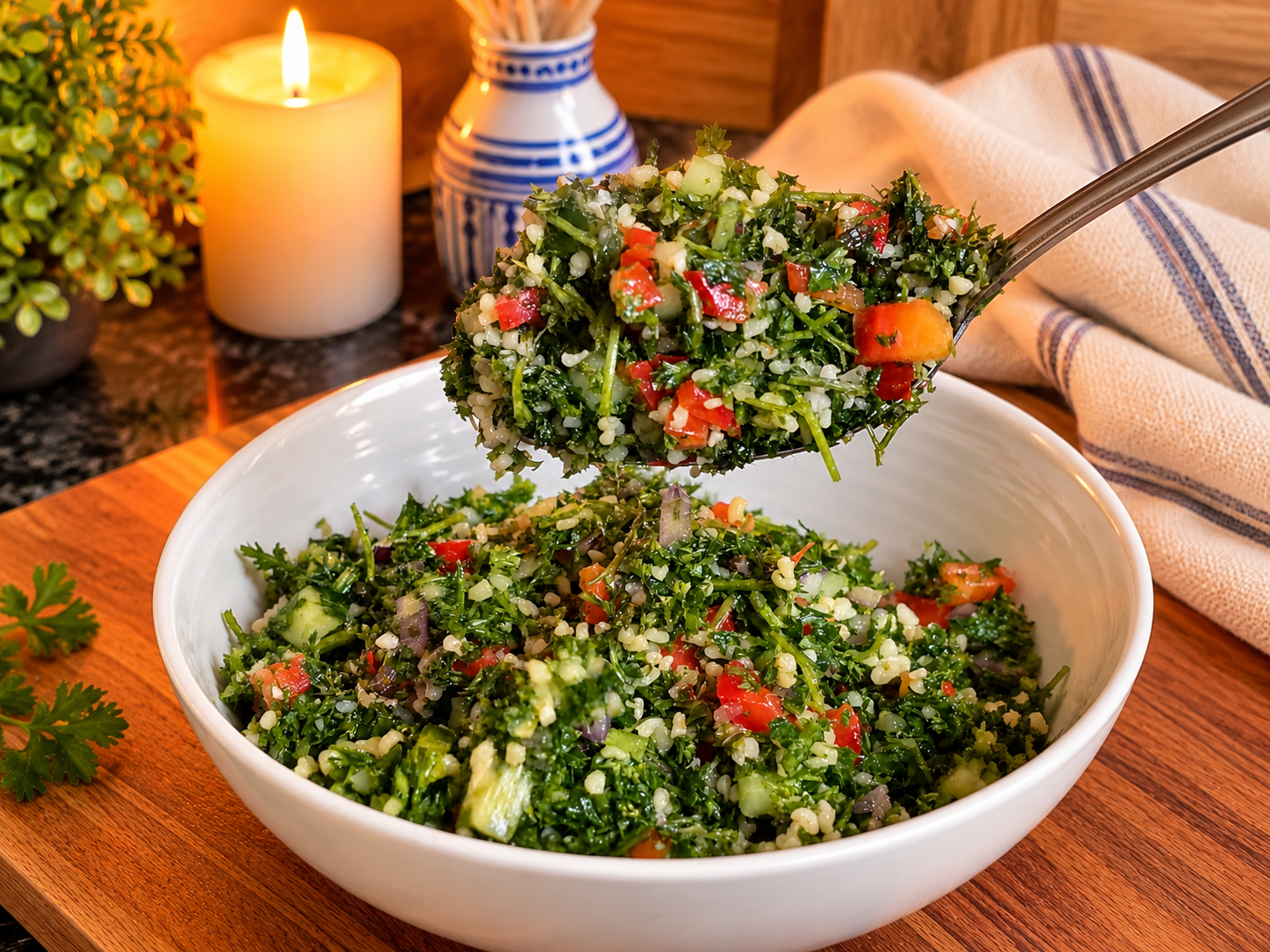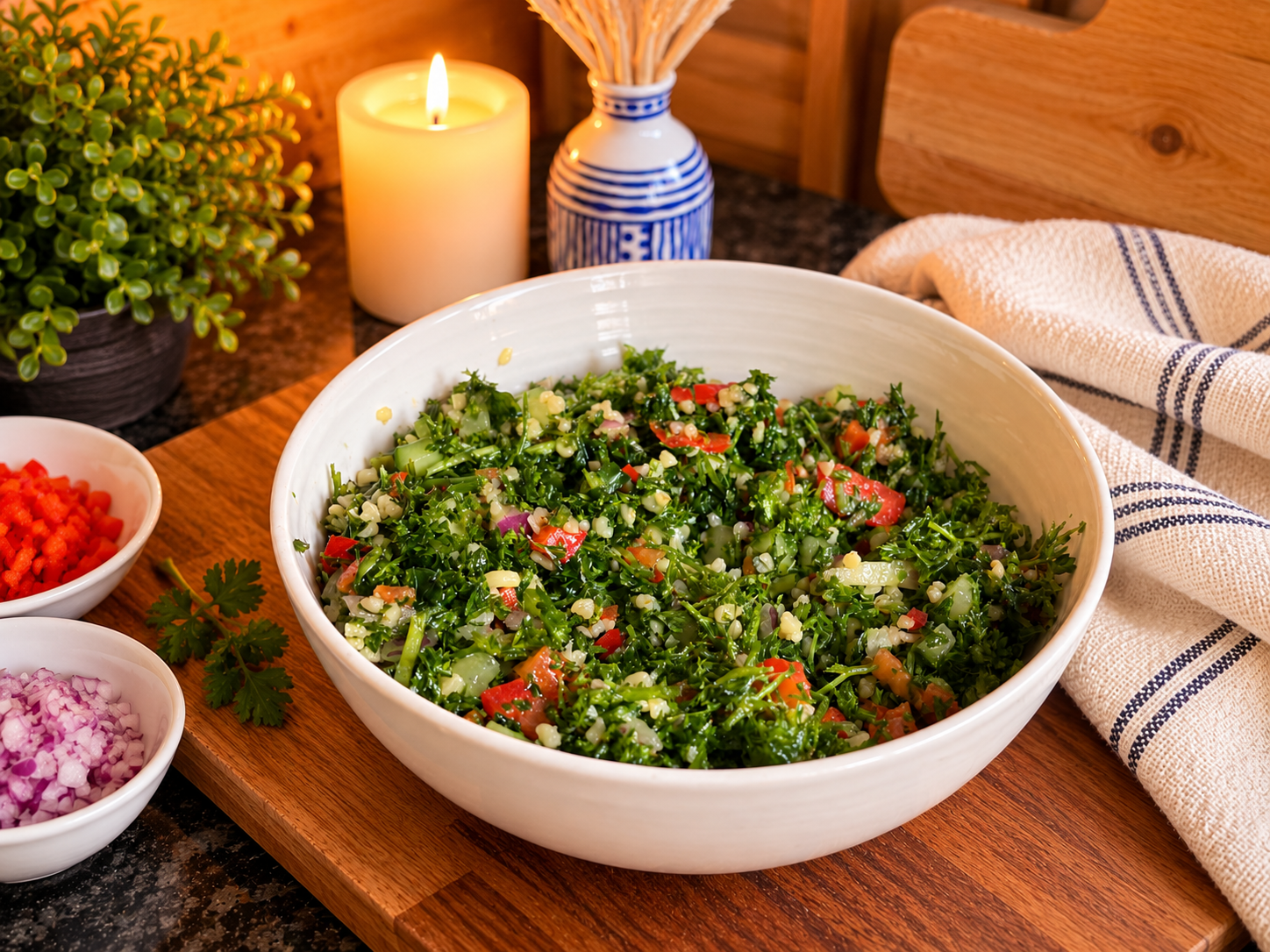
This fresh, herb-packed tabbouleh-inspired salad is made with finely chopped parsley, cilantro, mint, crunchy vegetables, tender bulgur, and a bright lemon and olive oil dressing.
It's my own take on traditional tabbouleh. While tabbouleh is typically made with tomatoes, I prefer using red bell pepper instead. I find that tomatoes can sometimes make the salad a little too soft and watery, especially after it has been sitting in the refrigerator. Red pepper gives it a nice crunch, and I also add English cucumber for extra freshness.
I use cilantro alongside the parsley and mint, which isn't typical of traditional tabbouleh but adds another layer of fresh herbal flavour.
Everything is chopped into small pieces so the herbs, vegetables, and bulgur mix together evenly. The salad is finished with fresh lemon juice, lemon zest, garlic, and olive oil, creating a bright, flavourful side dish.
I especially like serving it with my Sheet Pan Beef Kofta, homemade hummus, and tzatziki, all tucked into warm pita bread.
What Makes This Version Different?
Traditional tabbouleh is a parsley-based salad with bulgur, mint, tomatoes, lemon juice, and olive oil.
My version takes inspiration from those familiar flavours but makes a few changes to suit my preferences.
Red bell pepper instead of tomatoes: Adds crunch and holds its texture well.
English cucumber: Adds freshness and a crisp bite.
Fresh cilantro: Complements the parsley and mint with another layer of herbal flavour.
Lemon zest: Adds a little extra citrus flavour without making the salad too acidic.
Finely chopped vegetables: Help create an even texture, so you get a little of everything in each bite.
The result is a fresh, lemony salad that's full of herbs and has a little more crunch than a traditional tomato-based tabbouleh.
Ingredients You'll Need
Bulgur
Bulgur is a whole-grain wheat product that adds a slightly nutty flavour and tender texture.
This recipe uses a small amount of cooked bulgur so the fresh herbs and vegetables remain the focus.
Bulgur comes in different grind sizes, so the cooking method and time may vary depending on the type you're using.
Fresh Parsley
Parsley is the main herb in this salad and gives it its fresh, vibrant flavour.
Use fresh parsley and chop it finely for the best texture.
Fresh Cilantro
Cilantro isn't a typical ingredient in traditional tabbouleh, but I like the additional freshness it brings to this version.
Fresh Mint
Mint adds a subtle cooling flavour that works especially well with the lemon dressing.
Red Bell Pepper
Red bell pepper adds a little sweetness and a crisp texture.
It's my preferred substitute for tomatoes because it helps keep the salad from becoming too soft.
English Cucumber
English cucumber adds freshness and crunch.
Chop it into small pieces so it blends well with the other ingredients.
Red Onion
A small amount of finely minced red onion adds sharpness and savoury flavour.
Fresh Garlic
Garlic adds depth to the lemon and olive oil dressing.
Finely mincing it helps distribute the flavour throughout the salad.
Olive Oil
Olive oil brings the dressing together and coats the herbs, bulgur, and vegetables.
The amount can be adjusted depending on the moisture and volume of your chopped ingredients.
Fresh Lemon Juice and Zest
Fresh lemon juice adds acidity and brightness, while the zest brings out the lemon flavour without adding more liquid.
Salt
Salt helps bring out the flavours of the fresh vegetables, herbs, and dressing.
Herby Tabbouleh-Inspired Salad Recipe
Prep Time: Approximately 25 minutes
Cook Time: 13–15 minutes
Additional Time: Allow bulgur to cool
Course: Salad, Side Dish
Method: Stovetop and No-Cook Assembly
Cuisine: Middle Eastern-Inspired
Ingredients
For the Bulgur
1 cup dry bulgur
2 cups water, for cooking
For the Salad
2 bunches fresh parsley, finely chopped (I use food processor to save time with chopping)
1 bunch fresh cilantro, finely chopped
1 handful fresh mint leaves, finely chopped
1 large red bell pepper, finely diced
¾ English cucumber, finely diced
¼ red onion, finely minced
2 cloves garlic, minced
¾ cup cooked and cooled bulgur
For the Dressing
3–4 tablespoons olive oil, plus more as needed
4 tablespoons fresh lemon juice, plus more to taste
Zest of 1 lemon
Salt, to taste
Instructions
1. Cook the bulgur.
Add ½ cup of dry bulgur and 2 cups of water to a saucepan.
Bring to a boil, then reduce the heat and cook for approximately 13–15 minutes, or until the bulgur is tender.
Drain any remaining water and set aside to cool completely.
Measure out ¾ cup of the cooked bulgur for the salad. You may have some left over.
2. Prepare the fresh herbs.
Wash the parsley, cilantro, and mint thoroughly.
Dry them well before chopping. Excess moisture on the herbs can make the finished salad watery and dilute the dressing.
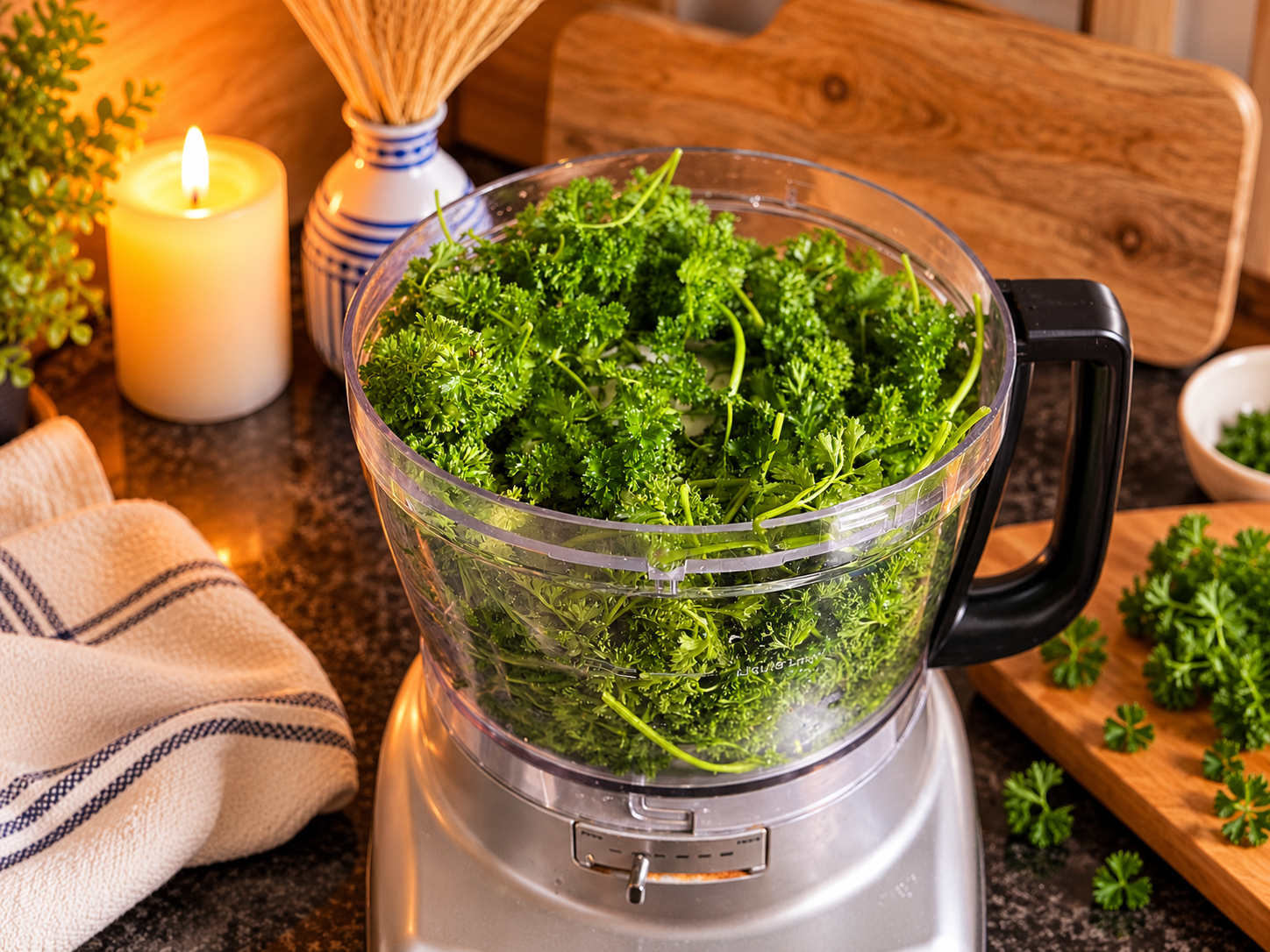
Remove any particularly thick stems, then finely chop the herbs. To save time, you can use a food processor to do the chopping for you.
3. Chop the vegetables.
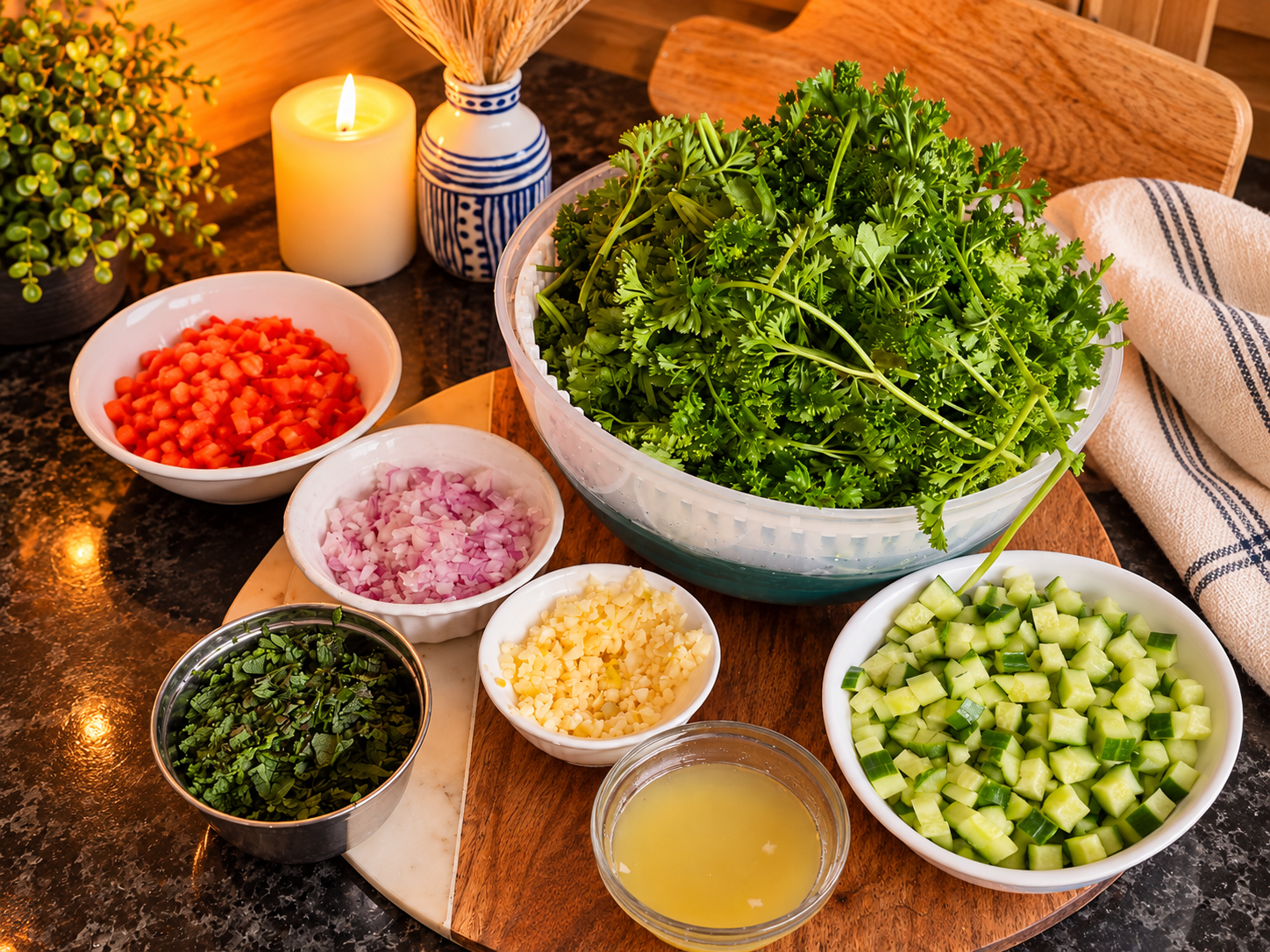
Finely dice the red bell pepper and English cucumber.
Mince the red onion and garlic into very small pieces.
Keeping the vegetables finely chopped is important for the overall texture of this salad.
4. Combine the salad ingredients.
In a large mixing bowl, add the chopped parsley, cilantro, mint, red pepper, cucumber, red onion, and garlic.
Add ¾ cup of the cooked and cooled bulgur.
Gently toss to combine.
5. Add the dressing.
Drizzle 3 tablespoons of olive oil over the salad.
Add the fresh lemon juice, lemon zest, and salt.
Toss thoroughly until the herbs, vegetables, and bulgur are evenly coated.
6. Adjust the dressing.
Taste the salad and check the consistency.
If it seems dry, add the remaining tablespoon of olive oil or a little more lemon juice.
Continue adjusting in small amounts until the salad is well coated and has a fresh, balanced flavour.
The salad should be moist and evenly dressed without having excess liquid collecting at the bottom of the bowl.
7. Serve.
Serve immediately, or refrigerate until ready to enjoy.
Before serving, give the salad another gentle toss and adjust the lemon juice, olive oil, or salt if needed.
Tips for Making the Best Tabbouleh-Inspired Salad
1. Chop Everything Finely
The texture of this salad depends on how finely the ingredients are chopped.
Rather than having large pieces of vegetables mixed with herbs, you want everything to be relatively small and evenly distributed.
This helps the dressing coat the ingredients properly and gives you a balanced bite.
Take a little extra time with the parsley, cilantro, mint, red pepper, cucumber, and onion.
2. Dry the Herbs Thoroughly
After washing the herbs, remove as much water as possible before chopping.
A salad spinner works well, or you can gently pat them dry with a clean kitchen towel.
Excess water can dilute the lemon and olive oil dressing and make the salad soggy.
3. Let the Bulgur Cool Completely
Avoid adding hot or warm bulgur to the chopped herbs.
The heat can soften the fresh ingredients and affect their texture.
Allow the bulgur to cool completely before mixing it into the salad.
4. Measure the Bulgur After Cooking
This recipe begins with ½ cup of dry bulgur, but only ¾ cup of the cooked bulgur is added to the salad.
Measure the cooked bulgur separately rather than adding the entire cooked batch.
This keeps the salad focused on the fresh herbs and vegetables instead of becoming too grain-heavy.
5. Use Fresh Lemon Juice
Freshly squeezed lemon juice gives the dressing a brighter flavour.
The lemon zest also adds a little extra citrus flavour without making the dressing too thin.
6. Adjust the Dressing as Needed
The amount of dressing needed can vary depending on the size of your parsley and cilantro bunches, as well as the amount of moisture in the vegetables.
Start with 3 tablespoons of olive oil and 4 tablespoons of lemon juice.
Toss the salad thoroughly, then taste and adjust.
You want the ingredients to be well coated, but the salad shouldn't be swimming in dressing.
7. Use Red Pepper for Extra Crunch
I prefer red bell pepper in this salad because it holds its texture well.
It also adds a little natural sweetness that balances the lemon juice and fresh herbs.
8. Don't Overdo the Bulgur
The herbs should remain the main component of the salad.
Adding too much bulgur can make it feel heavier and absorb more of the dressing.
If you prefer a more grain-forward salad, you can experiment with adding a little extra cooked bulgur, but you may also need more lemon juice and olive oil.
9. Taste Again Before Serving
Bulgur absorbs some of the dressing as the salad sits.
If you're making the salad ahead of time, give it a toss before serving and add a little more lemon juice or olive oil if it seems dry.
Frequently Asked Questions
Is This Traditional Tabbouleh?
No. This is my own tabbouleh-inspired salad.
Traditional Lebanese tabbouleh is generally made with plenty of fresh parsley, mint, tomatoes, a relatively small amount of bulgur, lemon juice, and olive oil.
My version replaces the tomatoes with red bell pepper and also includes English cucumber and cilantro.
It has a similar fresh, herb-forward character, but the ingredients and texture are a little different.
Why Use Red Pepper Instead of Tomatoes?
I prefer the crunch of red bell pepper.
Tomatoes can release quite a bit of moisture, which sometimes makes the salad softer than I like.
Red pepper holds its shape well and adds a little sweetness.
Can I Add Tomatoes Instead?
Yes. If you prefer tomatoes, you can replace some or all of the red bell pepper with finely diced tomatoes.
Removing the seeds and excess juice can help keep the salad from becoming watery.
Is Cilantro Normally Used in Tabbouleh?
Cilantro isn't generally included in traditional Lebanese tabbouleh.
I add it because I enjoy its fresh flavour alongside the parsley and mint.
If you prefer a more traditional herb combination, you can omit the cilantro and use more parsley.
What Is Bulgur?
Bulgur is made from wheat that has been parboiled, dried, and cracked.
It has a mild, nutty flavour and is commonly used in salads, pilafs, and other dishes.
Different sizes of bulgur require different preparation methods, so check the package instructions for the variety you're using.
Can I Use All of the Cooked Bulgur?
You can, but it will change the balance of the salad.
I use ¾ cup of cooked bulgur because I prefer the fresh herbs and vegetables to be the main ingredients.
If you add more bulgur, you may need additional dressing.
Can I Make This Salad Ahead of Time?
Yes. This salad can be prepared ahead and stored in the refrigerator.
The bulgur may absorb some of the dressing as it sits, so taste it before serving and add a little more lemon juice or olive oil if needed.
Why Is My Salad Dry?
The bulgur and chopped herbs can absorb some of the dressing.
The size of your herb bunches also affects how much dressing you'll need.
Add a little more olive oil or lemon juice, toss thoroughly, and taste again.
Why Is My Salad Watery?
Excess water from washed herbs or cucumber can make the salad watery.
Dry the herbs thoroughly and avoid adding excess liquid from the cooked bulgur.
Finely chopping the cucumber just before assembling can also help preserve its texture.
Is This Salad Gluten-Free?
No. Bulgur is made from wheat and contains gluten.
For a gluten-free variation, you could experiment with cooked quinoa instead, although the texture and flavour will be different.
How to Store Tabbouleh-Inspired Salad
Refrigerating
Transfer the salad to an airtight container and refrigerate promptly.
For the best freshness and texture, enjoy within approximately 2–3 days.
The herbs and vegetables will gradually soften as they sit in the dressing, but the red pepper helps retain some crunch.
Give the salad a gentle toss before serving.
Can You Freeze This Salad?
Freezing isn't recommended.
Fresh herbs, cucumber, and red bell pepper can lose their texture after thawing, leaving the salad soft and watery.
This recipe is best enjoyed fresh or refrigerated for a few days.
What to Serve With This Salad
This salad works well as a fresh side dish, but I especially like using it as part of a homemade pita dinner.
Sheet Pan Beef Kofta
My Sheet Pan Beef Kofta is made with seasoned ground beef, fresh herbs, garlic, and warm spices.
I like slicing the cooked kofta and serving it inside warm pita bread with hummus, tzatziki, and this salad.
Find my Sheet Pan Beef Kofta recipe here.
Homemade Hummus
Creamy homemade hummus made with chickpeas, tahini, lemon juice, garlic, and olive oil.
It's perfect as a dip or spread inside pita bread.
Find my Homemade Hummus recipe here.
Homemade Tzatziki
A cool, creamy yogurt sauce with cucumber, fresh dill, garlic, and lemon.
It pairs especially well with the seasoned beef and fresh herbs in this salad.
Find my Homemade Tzatziki recipe here.
You can prepare the hummus, tzatziki, and salad ahead of time, then bake the beef kofta when you're ready to serve dinner.
A Fresh, Herby Salad with Plenty of Crunch
This tabbouleh-inspired salad is a simple way to bring fresh herbs and vegetables together with a bright lemon dressing.
Using red pepper instead of tomatoes gives it a little more crunch, while cucumber and cilantro add freshness.
It's a great side dish on its own, but it's especially good served with homemade beef kofta, hummus, tzatziki, and warm pita bread.
Recipe Notes
Bulgur: Cook ½ cup of dry bulgur in 2 cups of water, then measure out ¾ cup of the cooked bulgur for the salad.
Bulgur variety: Cooking times vary depending on the grind, so follow the package directions if they differ.
Herbs: Use fresh parsley, cilantro, and mint, and dry them thoroughly before chopping.
Vegetables: Finely dice the red pepper and cucumber, and mince the red onion and garlic.
Tomato substitute: Red bell pepper replaces the tomatoes for a firmer, crunchier texture.
Dressing: Start with 3 tablespoons of olive oil and 4 tablespoons of lemon juice. Adjust as needed until everything is well coated.
Make ahead: The salad can be refrigerated, but you may need to refresh the dressing before serving.
Storage: Refrigerate in an airtight container and enjoy within approximately 2–3 days.
Serving: Enjoy with pita, hummus, tzatziki, beef kofta, or grilled meats.