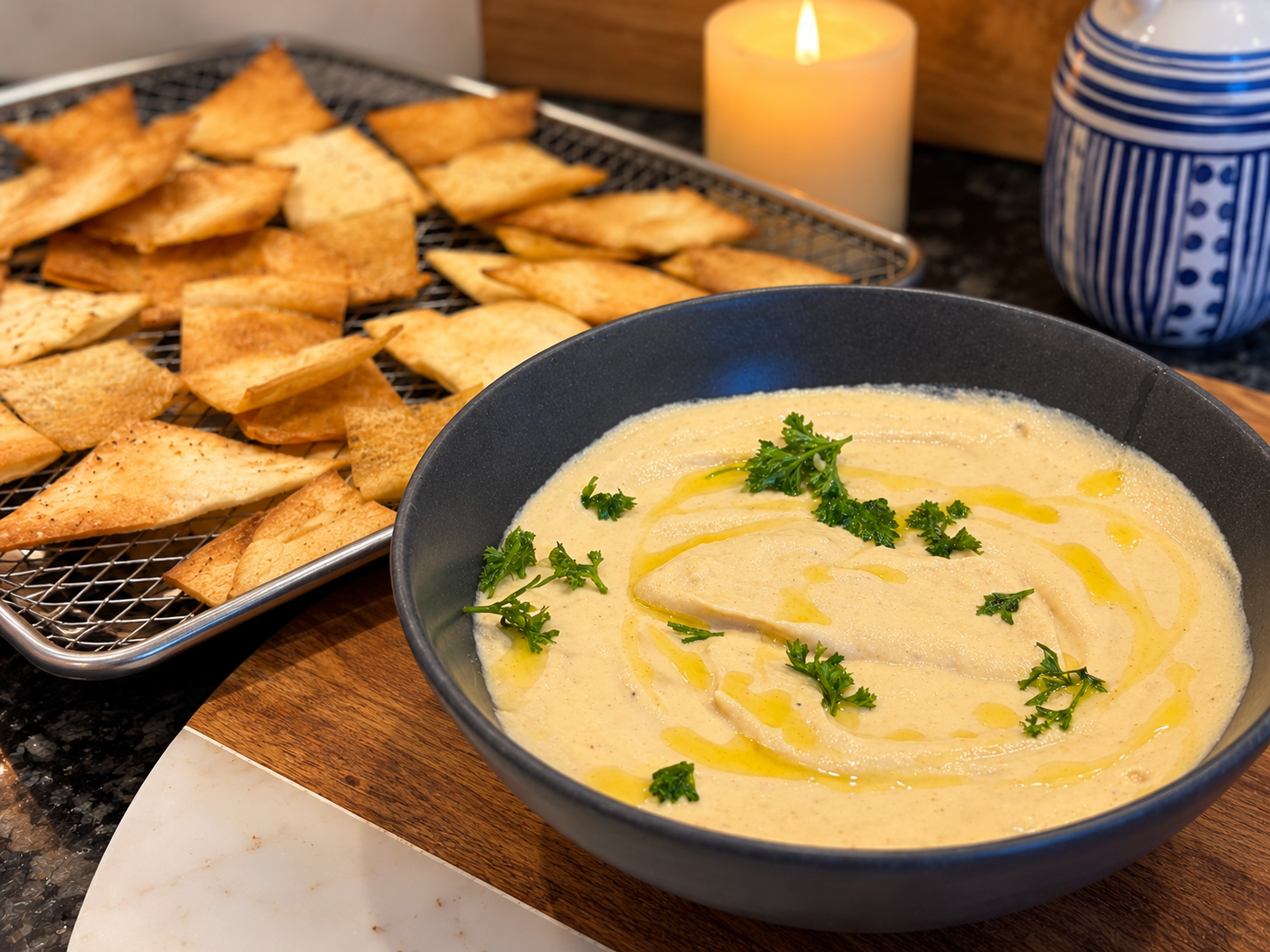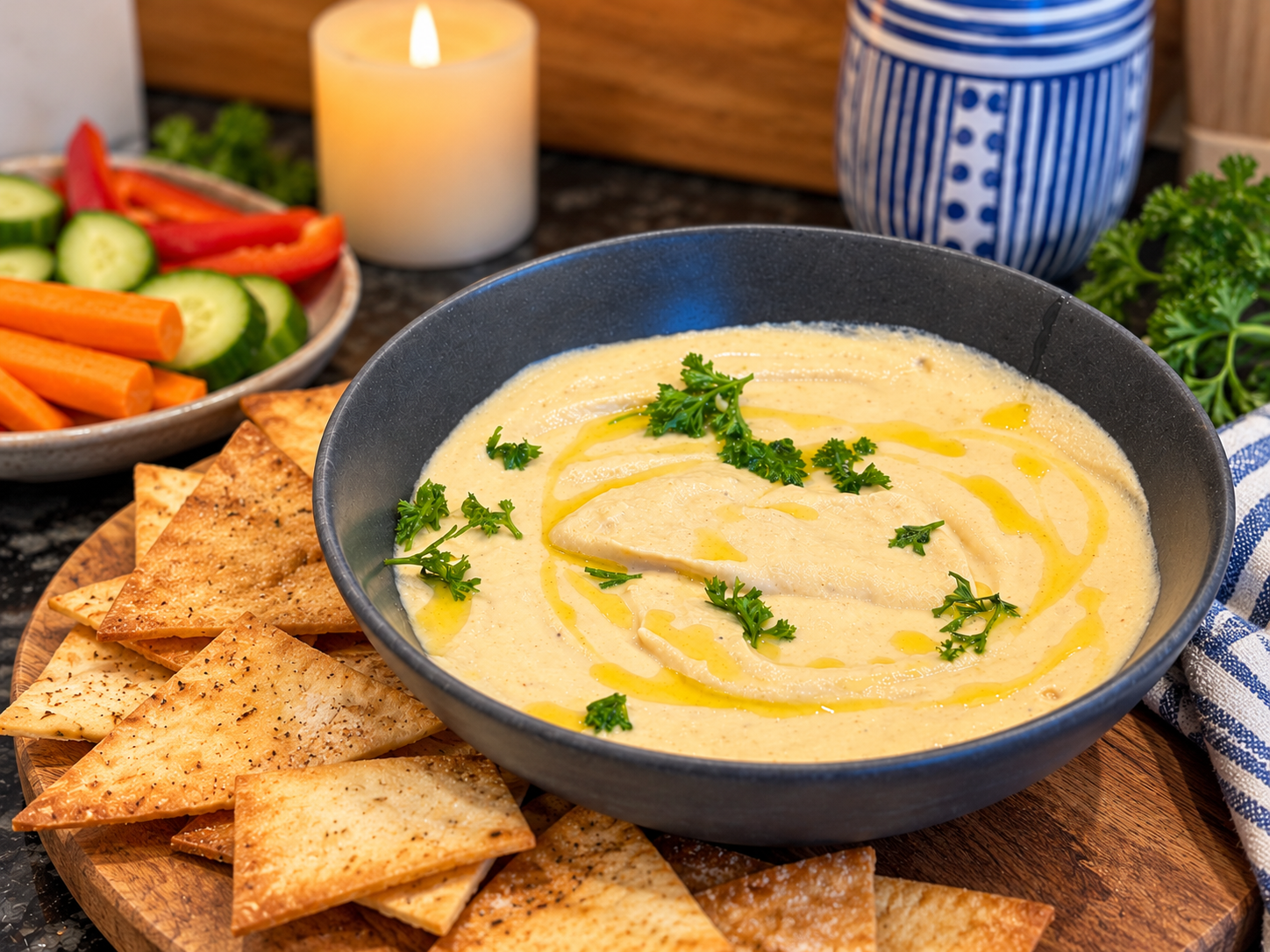
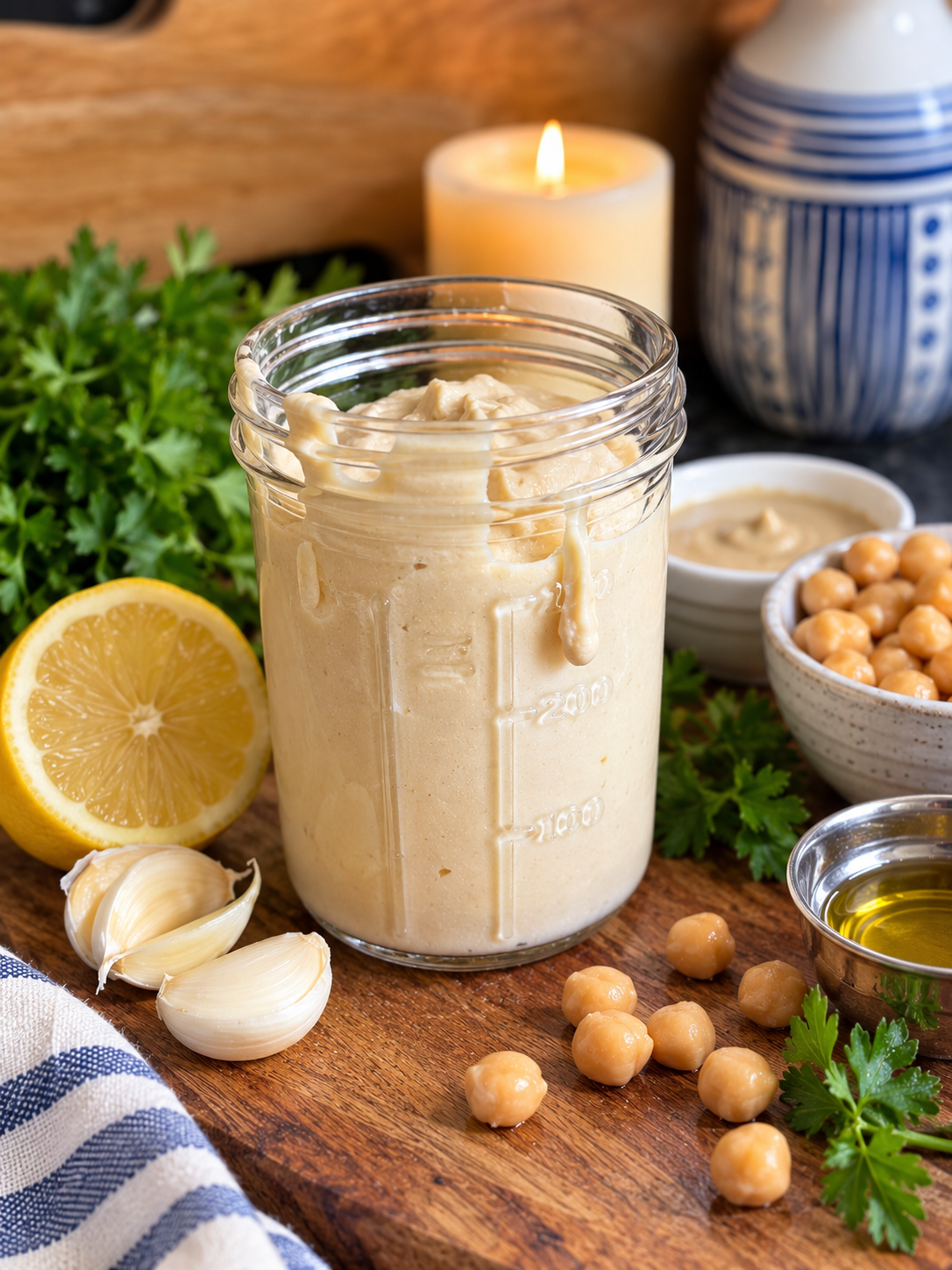
This homemade hummus is smooth, creamy, and full of flavour. Made with chickpeas, tahini, fresh lemon juice, garlic, olive oil, and cumin, it's a simple recipe that comes together in just a few minutes using a blender.
I love making hummus from scratch because it's easy to adjust the flavour and consistency to your liking. A little extra lemon juice gives it a brighter flavour, while a splash of water helps create a softer, smoother texture.
It's perfect for spreading inside wraps, serving with warm pita bread, or enjoying as a dip with fresh vegetables and pita chips.
I also like serving it alongside my Sheet Pan Beef Kofta, homemade tzatziki, and tabbouleh. The hummus adds a creamy base to the pita wraps and pairs especially well with the fresh herbs and warm spices in the beef.
What Is Hummus?
Hummus is a traditional Middle Eastern dip made primarily from chickpeas and tahini, often blended with lemon juice, garlic, and olive oil.
It's known for its creamy texture and savoury, slightly nutty flavour.
This version uses canned chickpeas to keep preparation simple. Everything goes directly into a high-speed blender, making it an easy recipe to prepare whenever you need a quick dip or spread.
Why You'll Love This Recipe
Simple ingredients: Made with pantry staples and a few fresh ingredients.
Quick to prepare: There's no cooking required when using canned chickpeas.
Smooth and creamy: Tahini, olive oil, and water help create a creamy consistency.
Easy to customize: Adjust the lemon, garlic, salt, and water to suit your preference.
Versatile: Serve as a dip, spread it in wraps, or add it to homemade bowls.
Great for making ahead: Prepare it in advance and refrigerate until needed.
Ingredients You'll Need
Chickpeas
Chickpeas are the base of hummus and provide its creamy texture and mild, nutty flavour.
Using canned chickpeas makes this recipe especially convenient because they're already cooked.
Rinse and drain them well before adding them to the blender.
Tahini
Tahini is a paste made from ground sesame seeds. It adds richness, a slightly nutty flavour, and helps create the smooth texture associated with hummus.
Be sure to stir your tahini before measuring if the natural oils have separated.
Fresh Lemon Juice
Fresh lemon juice adds brightness and balances the richness of the tahini and olive oil.
I recommend using freshly squeezed lemon juice for the best flavour.
Olive Oil
Olive oil adds richness and helps bring the ingredients together.
Extra-virgin olive oil works well, especially if you enjoy its flavour.
Garlic
Fresh garlic adds a savoury bite to the hummus.
This recipe uses one large clove, but you can adjust the amount depending on how strong you like the garlic flavour.
Ground Cumin
Cumin adds a subtle earthy warmth that complements the chickpeas and tahini.
Salt
Salt helps bring out the flavours of the other ingredients.
Start with a small amount, blend, and adjust to taste.
Water
A few tablespoons of water help the hummus blend smoothly and allow you to adjust the consistency.
Start with the smaller amount and add more as needed.
Homemade Hummus Recipe
Prep Time: Approximately 10 minutes
Cook Time: None
Total Time: Approximately 10 minutes
Yield: Approximately 1½–2 cups, depending on the amount of water added
Course: Appetizer, Dip, Side Dish
Method: Blender, No-Cook
Cuisine: Middle Eastern-Inspired
Ingredients
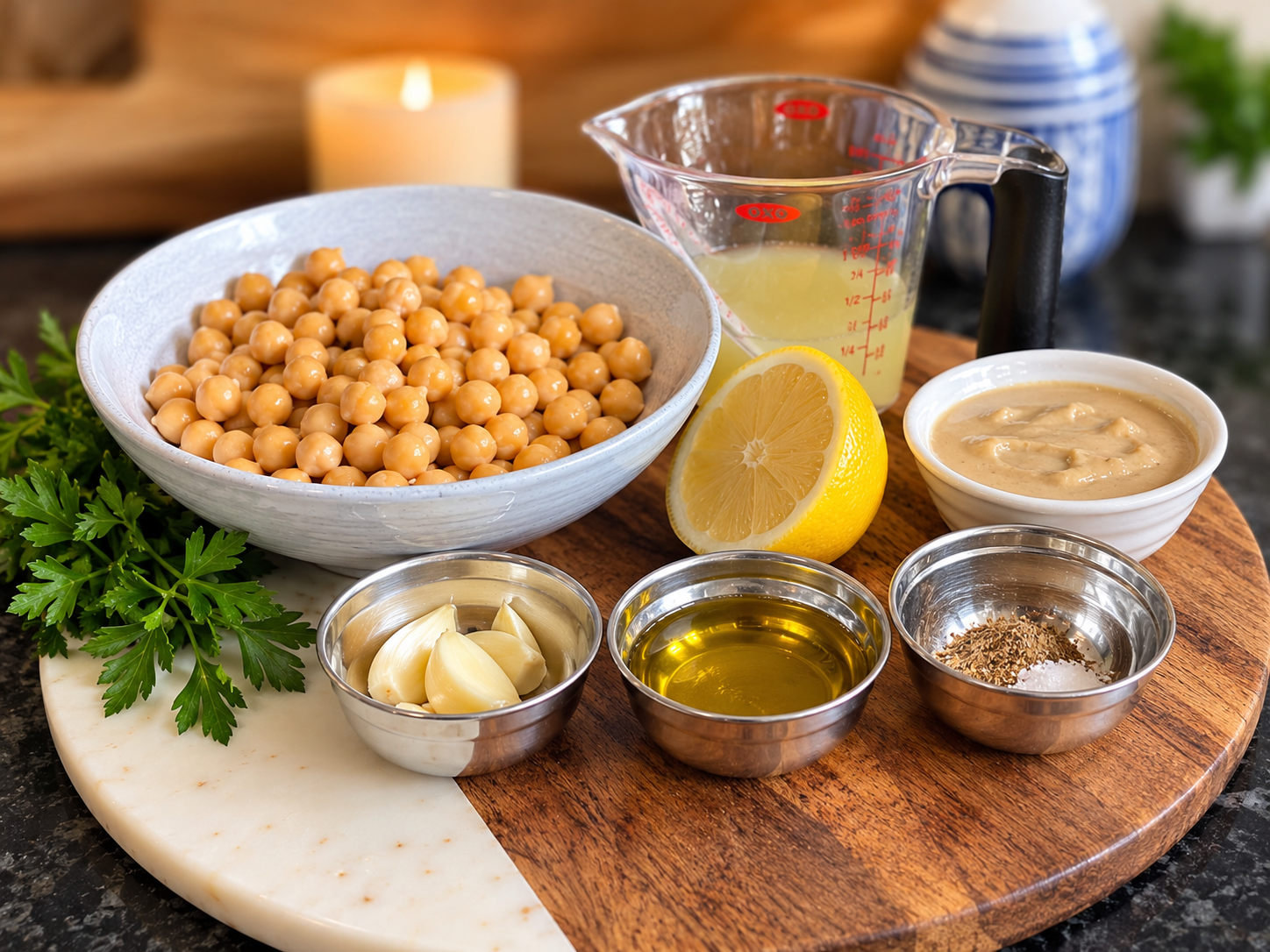
1 can (14 oz / approximately 400 g) chickpeas, rinsed and drained
¼ cup fresh lemon juice
¼ cup tahini
2 tablespoons olive oil
1 large garlic clove, peeled
1 teaspoon ground cumin
Salt, to taste
2–3 tablespoons water, plus more as needed
For Garnishing
A drizzle of olive oil
Fresh parsley, chopped
Instructions
1. Prepare the chickpeas.
Drain the canned chickpeas and rinse them thoroughly under cool running water.
Allow any excess water to drain before transferring them to the blender.
2. Add the ingredients to the blender.
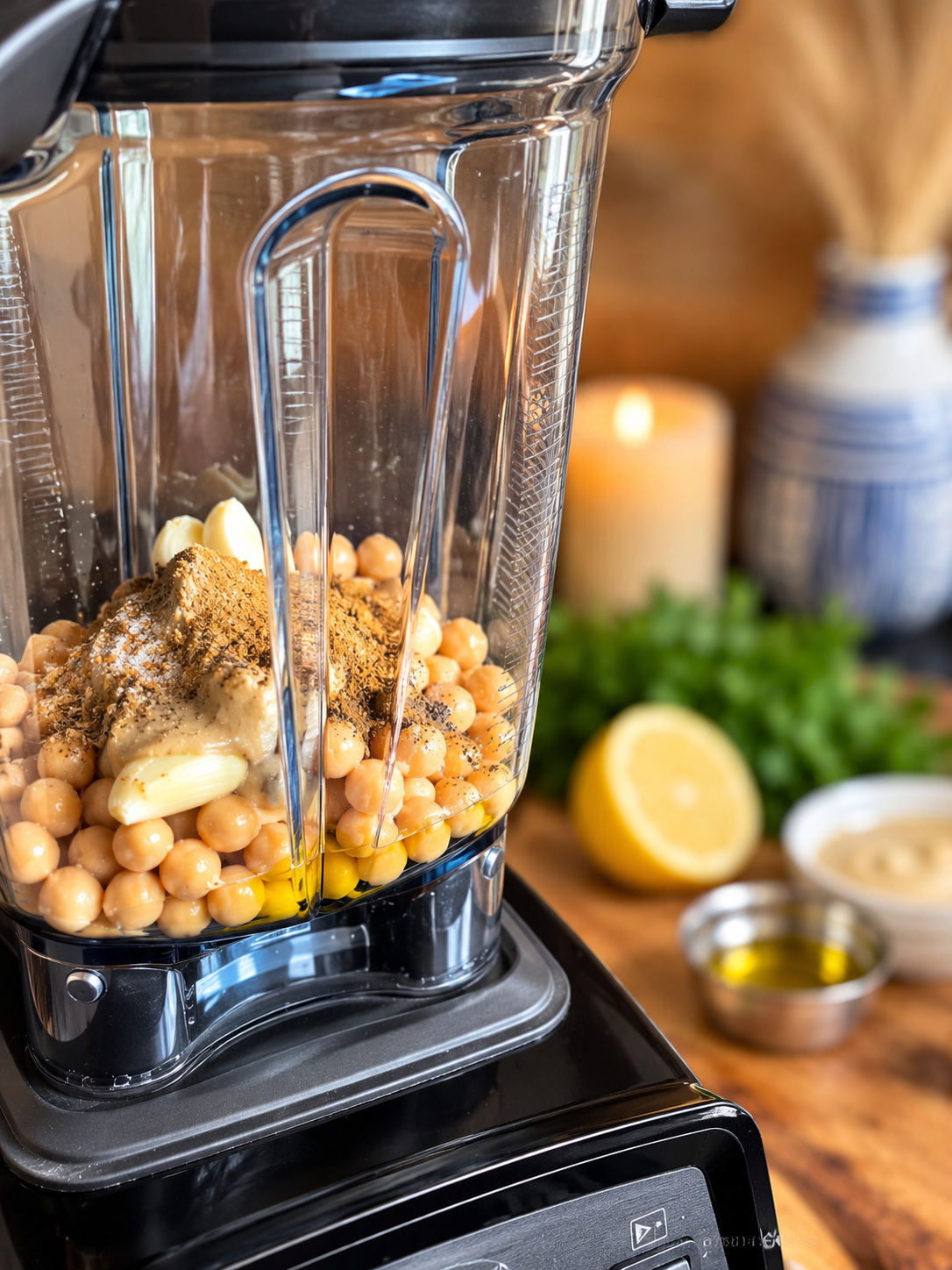
Add the chickpeas, fresh lemon juice, tahini, olive oil, garlic, ground cumin, salt, and 2 tablespoons of water to a high-speed blender, such as a Vitamix.
3. Blend until smooth.
Blend the ingredients until smooth and creamy.
Stop the blender as needed to scrape down the sides and make sure everything is evenly incorporated.
Depending on your blender, you may need to add a little more water to help the mixture blend.
4. Adjust the consistency.
If the hummus is thicker than you prefer, add another tablespoon of water and blend again.
Continue adding small amounts of water until you reach your desired consistency.
For spreading inside wraps, I prefer a slightly thicker hummus. For dipping, you may want it a little softer.
5. Taste and adjust.
Taste the hummus and adjust the salt if needed.
You can also add a little more lemon juice or garlic to suit your preference.
6. Garnish and serve.
Transfer the hummus to a shallow serving bowl.
Use the back of a spoon to create a small swirl on the surface, then drizzle with olive oil and sprinkle with freshly chopped parsley.
Serve with warm pita bread, pita chips, fresh vegetables, or use as a spread in homemade wraps.
Tips for Making Smooth and Creamy Hummus
1. Use a High-Speed Blender
A high-speed blender, such as a Vitamix, works particularly well for this recipe because it can break down the chickpeas and blend the tahini into a smooth consistency.
If you're using a regular blender or food processor, you may need to blend a little longer and stop occasionally to scrape down the sides.
2. Add the Water Gradually
It's much easier to thin hummus than to thicken it once too much liquid has been added.
Start with 2 tablespoons of water and add more only as needed.
The amount you need will depend on the chickpeas, tahini, and type of blender you're using.
3. Stir the Tahini Before Measuring
Natural tahini often separates in the jar, with oil collecting at the top.
Give it a thorough stir before measuring so you're getting an even mixture of sesame paste and oil.
This helps maintain a consistent flavour and texture.
4. Use Fresh Lemon Juice
Freshly squeezed lemon juice gives hummus a bright flavour that balances the richness of the chickpeas and tahini.
Bottled lemon juice can have a slightly different taste, so fresh is recommended whenever possible.
5. Blend Thoroughly
One of the simplest ways to improve the texture of homemade hummus is to blend it long enough.
Even after the ingredients appear combined, additional blending can help smooth out small pieces of chickpea.
Pause to scrape down the blender as needed.
6. Adjust the Garlic to Your Preference
Raw garlic has a strong flavour, especially after the hummus has been refrigerated.
One large clove provides a noticeable garlic flavour, but you can use a smaller clove if you prefer something milder.
7. For an Extra-Smooth Texture, Soften the Chickpeas
This recipe works well with canned chickpeas straight from the can.
However, if you prefer an especially smooth hummus, you can simmer the drained chickpeas in water for several minutes until they're very soft, then drain and allow them to cool slightly before blending.
This is an optional step rather than a requirement.
8. Taste Before Serving
The flavour of hummus can vary depending on the brand of tahini, the size of the garlic clove, and the acidity of the lemon.
Taste after blending and make any final adjustments before serving.
9. Keep the Garnish Simple
A drizzle of good olive oil and a little fresh parsley are all you need to finish homemade hummus.
You can also add a light sprinkle of paprika or cumin if you'd like.
Frequently Asked Questions
Can I Make Hummus Without a Food Processor?
Yes. This recipe is designed to be made in a blender.
A high-speed blender works especially well, although a regular blender may also work with some additional scraping and a little extra water.
Do I Need to Cook Canned Chickpeas?
No. Canned chickpeas are already cooked, so you can rinse, drain, and blend them directly.
Cooking them further is optional and can help create an even softer texture.
Do I Need to Remove the Chickpea Skins?
No. Removing the skins isn't necessary for this recipe.
A high-speed blender should produce a smooth hummus without that extra step.
If you want to experiment with an exceptionally smooth texture, removing the skins is an option, but it takes more preparation time.
Why Is My Hummus Too Thick?
Hummus may be too thick if there isn't enough liquid for the chickpeas and tahini to blend smoothly.
Add water a tablespoon at a time and blend again until you reach your preferred consistency.
Why Is My Hummus Grainy?
A grainy texture can result from chickpeas that haven't been blended thoroughly or from chickpeas that are relatively firm.
Try blending longer, adding a small amount of water, or using softer chickpeas.
Can I Make Hummus Without Tahini?
You can make a chickpea dip without tahini, but it won't have quite the same flavour or richness as traditional hummus.
Tahini contributes a distinctive nutty flavour and creamy texture.
Can I Use Dried Chickpeas Instead of Canned?
Yes, but dried chickpeas must be soaked and cooked until tender before using them.
For this particular recipe, canned chickpeas keep preparation quick and convenient.
Can I Make Hummus Ahead of Time?
Yes. Homemade hummus is a great recipe to prepare in advance.
Store it in an airtight container in the refrigerator until you're ready to serve.
Give it a stir before serving and add a small splash of water if it has thickened.
What Can I Eat With Hummus?
Hummus is versatile and can be enjoyed with:
Warm pita bread
Pita chips
Fresh cucumber, carrots, and bell peppers
Homemade beef kofta wraps
Sandwiches and wraps
Rice or grain bowls
Roasted vegetables
How to Store Homemade Hummus
Refrigerating
Transfer the hummus to an airtight container and store it in the refrigerator.
For best freshness and quality, enjoy within approximately 3–4 days.
The hummus may thicken slightly as it chills. Stir before serving and add a small amount of water if needed.
Freezing
Homemade hummus can be frozen, although the texture may change slightly after thawing.
Transfer it to a freezer-safe container, leaving a little room for expansion.
For best quality, use within approximately 2–3 months.
Thaw in the refrigerator and stir well before serving. If the texture seems a little thick, blend or stir in a small amount of water or olive oil.
What to Serve With Homemade Hummus
Homemade hummus is one of my favourite additions to a simple pita dinner.
It's creamy, savoury, and works well with both warm meats and fresh vegetables.
For a complete homemade meal, try pairing it with these recipes:
Sheet Pan Beef Kofta
Seasoned ground beef mixed with fresh parsley, mint, garlic, and warm spices, then baked on a sheet pan and sliced for serving.
Spread hummus inside warm pita bread, add the beef kofta, and finish with tzatziki and tabbouleh.
Find my Sheet Pan Beef Kofta recipe here.
Homemade Tzatziki
A refreshing yogurt and cucumber sauce made with garlic, fresh lemon, and dill.
The cool, creamy tzatziki pairs especially well with the seasoned beef and hummus.
Find my Homemade Tzatziki recipe here.
Homemade Tabbouleh
A fresh, herb-filled salad that adds brightness and texture to pita wraps and homemade Mediterranean-inspired meals.
Find my Homemade Tabbouleh recipe here.
You can prepare the hummus, tzatziki, and tabbouleh ahead of time, then make the beef kofta when you're ready to serve dinner.
A Simple Homemade Dip for Everyday Meals
Homemade hummus is an easy recipe to keep on hand for snacks, lunches, and dinners.
With chickpeas, tahini, lemon, garlic, and olive oil, it comes together quickly and can be adjusted to suit your preferred flavour and consistency.
Whether you're spreading it into a wrap, serving it with fresh vegetables, or adding it to a homemade beef kofta dinner, it's a versatile recipe made with simple ingredients.
Recipe Notes
Yield: Approximately 1½–2 cups, depending on the amount of water added.
Chickpeas: Use canned, cooked chickpeas that have been rinsed and drained.
Tahini: Stir well before measuring if the oil has separated.
Blender: A high-speed blender works best for a very smooth texture.
Consistency: Start with 2 tablespoons of water and add more gradually as needed.
Lemon: Freshly squeezed lemon juice is recommended.
Garlic: Adjust the amount according to your preference.
Storage: Refrigerate in an airtight container and enjoy within 3–4 days.
Serving: Drizzle with olive oil and garnish with fresh parsley before serving.