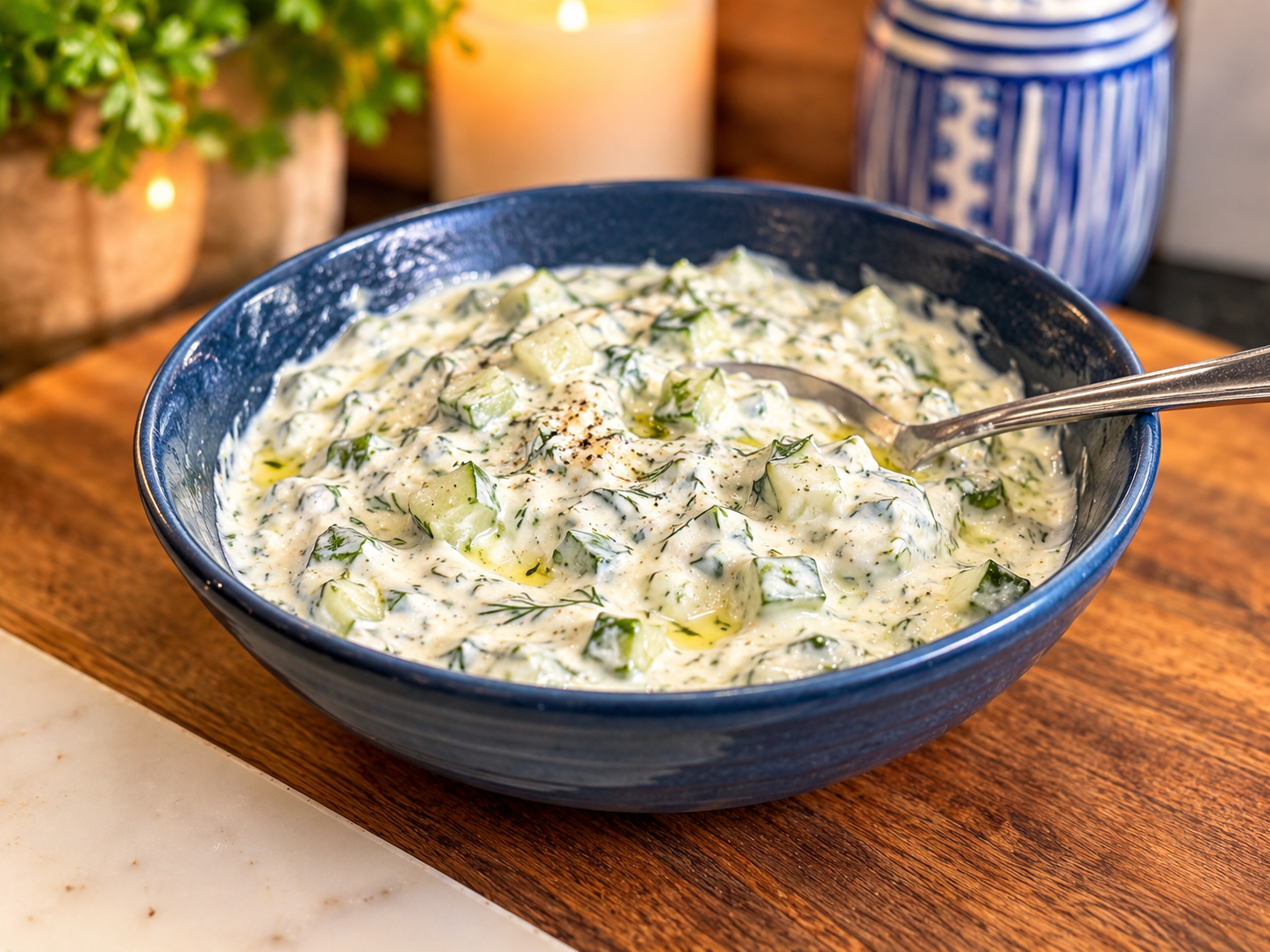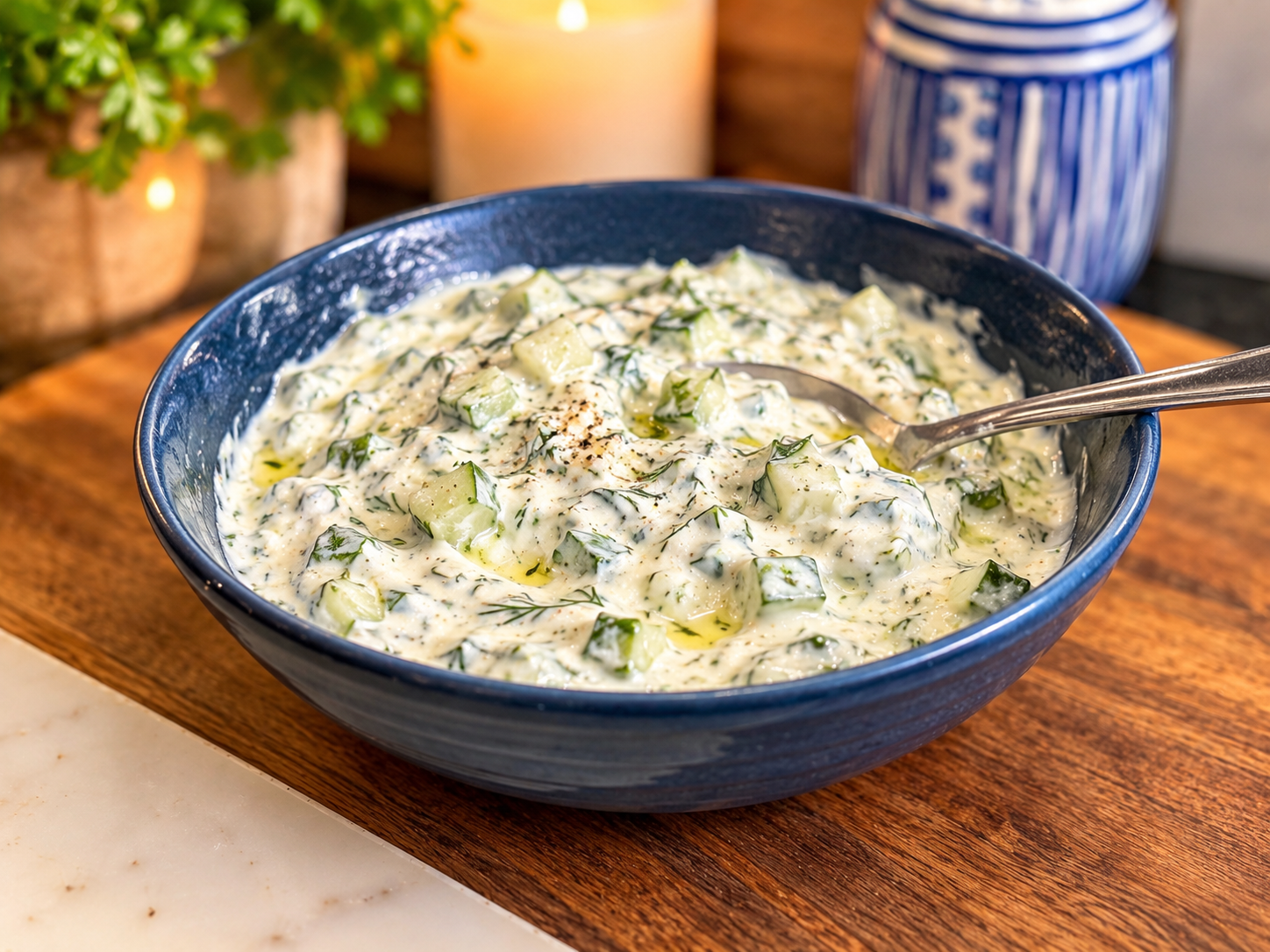
Fresh, creamy, and full of flavour, this Homemade Tzatziki Sauce is a simple addition to so many meals. Made with plain yogurt, fresh cucumber, garlic, lemon, and dill, it's a refreshing sauce that comes together with just a little chopping and mixing.
The cucumber adds a light crunch, while the lemon juice and zest give the sauce a bright, fresh flavour. Fresh dill and garlic bring everything together, making this a great accompaniment to grilled meats, warm pita bread, roasted vegetables, and homemade Mediterranean-inspired meals.
I especially like serving this tzatziki with my Sheet Pan Beef Kofta, alongside homemade hummus and tabbouleh. It's a nice contrast to the warm spices in the beef, and all three sides can be prepared ahead of time to make dinner easier.
There's no cooking required, and the sauce can be made in advance and kept in the refrigerator until you're ready to serve.
What Is Tzatziki?
Tzatziki is a traditional Greek yogurt-based sauce or dip, commonly made with cucumber, garlic, olive oil, and herbs.
It's known for its cool, creamy texture and refreshing flavour. Depending on the recipe, tzatziki may include lemon juice, vinegar, dill, or other herbs.
This homemade version uses plain yogurt, finely diced English cucumber, fresh lemon juice and zest, garlic, and chopped dill.
It's a versatile sauce that works just as well spread inside pita bread as it does served in a bowl for dipping.
Why You'll Love This Recipe
Fresh ingredients: Cucumber, lemon, garlic, and dill give this sauce a bright, refreshing flavour.
No cooking required: Everything comes together in one bowl.
Easy to prepare ahead: The sauce can be refrigerated until you're ready to serve.
Versatile: Use it as a dip, spread, or topping for a variety of meals.
Made from scratch: A simple alternative to store-bought tzatziki, with control over the ingredients and seasoning.
Pairs well with homemade meals: Especially good with beef kofta, warm pita, roasted vegetables, and grilled meats.
Ingredients You'll Need
Plain Yogurt
Plain yogurt forms the creamy base of this tzatziki.
For a thicker, richer sauce, Greek yogurt is a good option. Regular plain yogurt also works, although the finished consistency may be a little thinner.
Be sure to use unsweetened, unflavoured yogurt.
English Cucumber
English cucumber adds freshness and a little texture.
Removing the seeds helps reduce excess moisture, while finely dicing the cucumber ensures it distributes evenly throughout the sauce.
If your cucumber is especially watery, you can gently squeeze out some of the excess liquid before adding it to the yogurt.
Olive Oil
A small amount of olive oil adds richness and helps round out the flavours.
Extra-virgin olive oil works well here, particularly if you enjoy its slightly fruity flavour.
Fresh Lemon Juice
Fresh lemon juice gives the sauce a bright, tangy flavour that balances the creamy yogurt.
Lemon Zest
Lemon zest adds a more concentrated citrus flavour without introducing additional liquid.
For the best flavour, zest the lemon before squeezing out the juice.
Garlic
Fresh minced garlic adds a savoury bite and is one of the key flavours in tzatziki.
Finely mincing the garlic helps it blend evenly into the sauce.
Fresh Dill
Fresh dill gives tzatziki its distinctive herbal flavour.
Chop it finely so it's distributed throughout the sauce rather than concentrated in a few bites.
Salt and Black Pepper
Salt helps bring out the flavours of the cucumber, lemon, and garlic, while black pepper adds a little warmth.
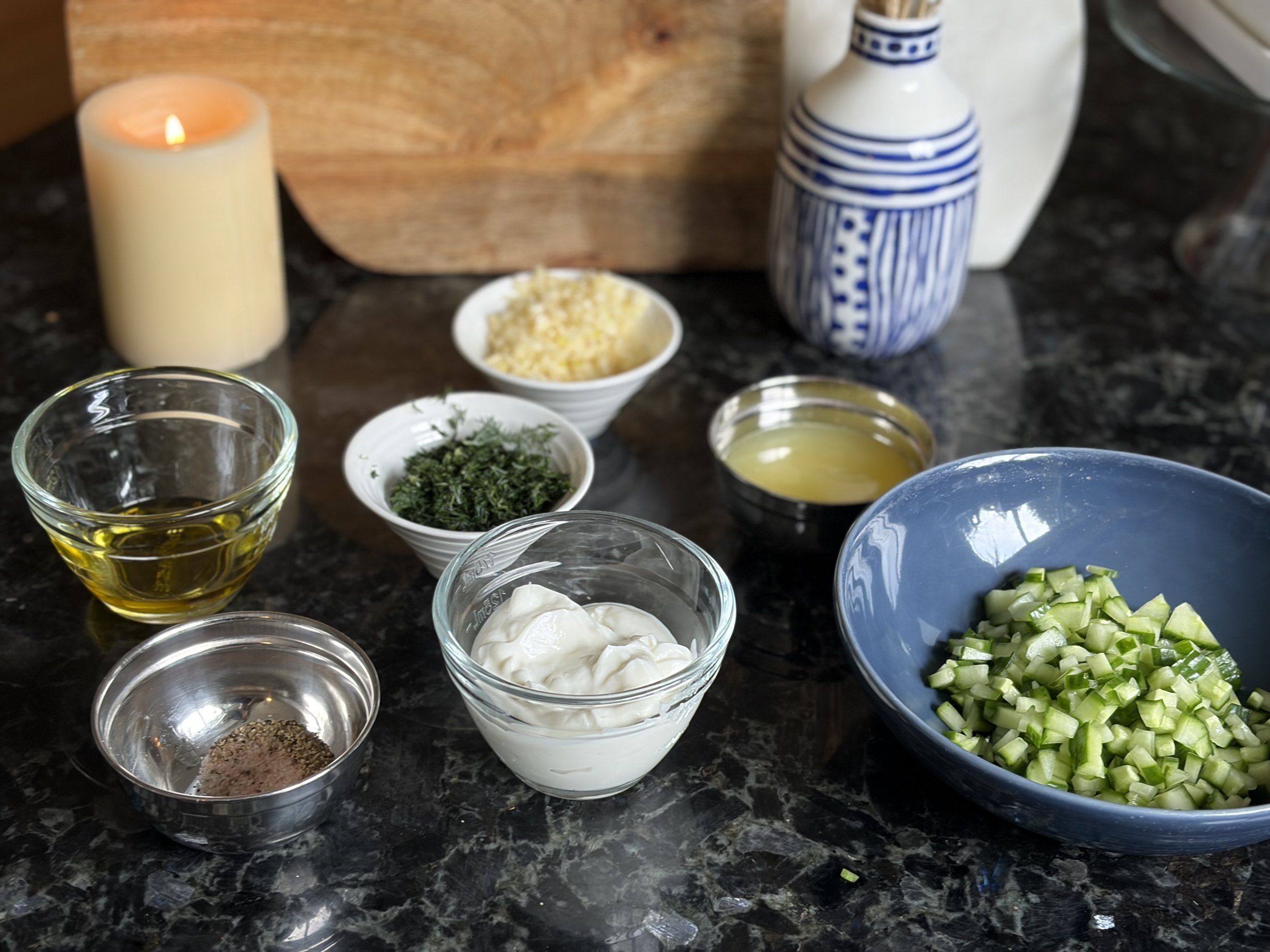
Homemade Tzatziki Sauce Recipe
Prep Time: Approximately 15 minutes
Cook Time: None
Optional Chill Time: 30 minutes
Yield: Approximately 2 cups
Course: Sauce, Dip, Side Dish
Method: No-Cook
Cuisine: Greek-Inspired
Ingredients
1 cup plain yogurt
½ English cucumber, seeds removed and finely diced (approximately ⅔ cup)
2 teaspoons olive oil
3 tablespoons fresh lemon juice
1 tablespoon lemon zest
1 tablespoon minced garlic
¼ cup fresh dill, finely chopped
½ teaspoon salt
¼ teaspoon black pepper
Instructions
1. Prepare the cucumber.
Wash the English cucumber and slice it in half lengthwise.
Using a small spoon, gently scrape out the seeds from the centre.
Finely dice half of the cucumber into small, even pieces, measuring approximately ⅔ cup.
If the cucumber contains a lot of moisture, gently pat it dry with paper towel or squeeze out some of the excess liquid.
2. Prepare the fresh ingredients.
Finely mince the garlic and chop the fresh dill.
Zest the lemon before cutting and juicing it.
3. Combine the ingredients.
In a medium mixing bowl, add the plain yogurt, diced cucumber, olive oil, lemon juice, lemon zest, minced garlic, and fresh dill.
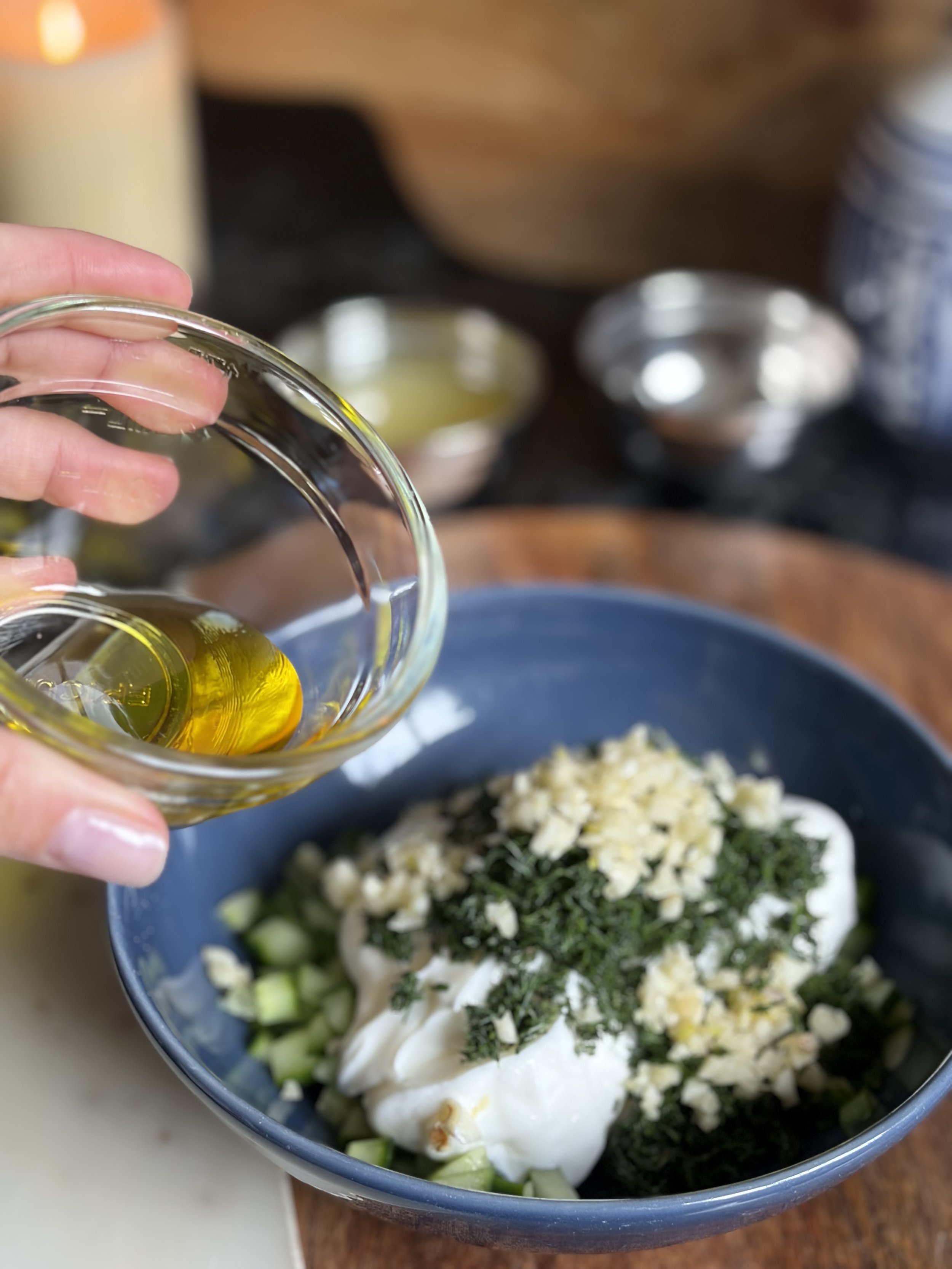
4. Season the sauce.
Add the salt and black pepper.
Stir everything together until the ingredients are evenly combined and the cucumber and herbs are distributed throughout the yogurt.
5. Taste and adjust.
Taste the tzatziki and adjust the seasoning if needed.
You can add a little more salt, lemon juice, or fresh dill depending on your preference.
6. Refrigerate if desired.
For the best flavour, cover the bowl and refrigerate for approximately 30 minutes before serving.
This allows the garlic, lemon, and dill to blend into the yogurt.
7. Serve.
Transfer the tzatziki to a serving bowl and enjoy with warm pita bread, beef kofta, roasted vegetables, or your favourite Mediterranean-inspired dishes.
If desired, finish with a small drizzle of olive oil and a little additional fresh dill.
Tips for Making the Best Homemade Tzatziki
1. Remove the Cucumber Seeds
Cucumber contains quite a bit of water, particularly around the seeds.
Removing the seeds before dicing helps prevent excess moisture from thinning out the yogurt.
This is especially helpful if you're making the sauce ahead of time.
2. Dice the Cucumber Finely
Finely diced cucumber gives the sauce a little texture without leaving large pieces.
Try to keep the pieces relatively small and even so the cucumber distributes well throughout the yogurt.
If you prefer a smoother texture, you can also grate the cucumber instead, although you'll want to squeeze out the excess moisture thoroughly.
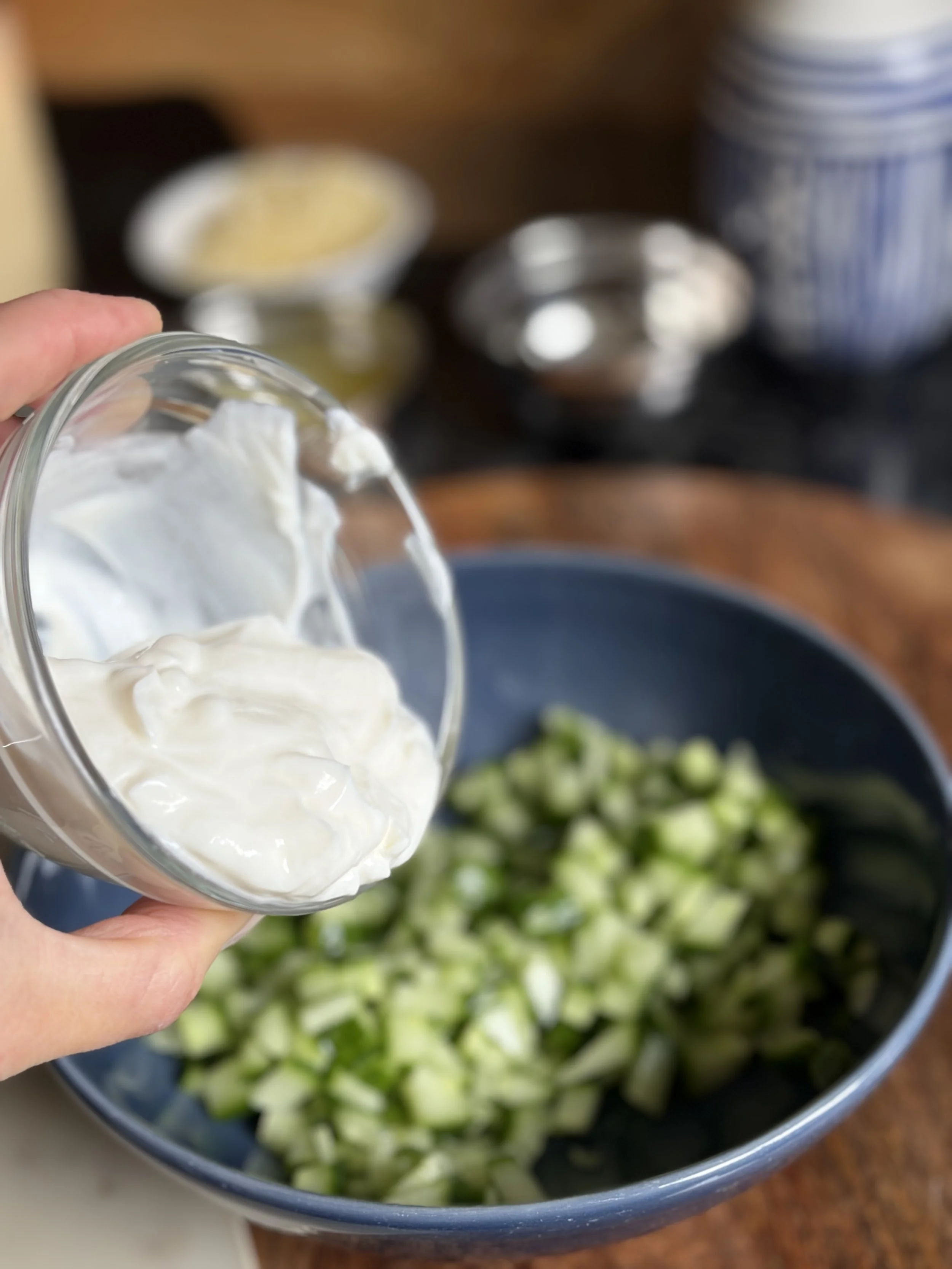
3. Use Thick Yogurt for a Creamier Sauce
The type of yogurt you choose will affect the finished consistency.
Greek yogurt generally produces a thicker tzatziki, while regular plain yogurt gives it a slightly lighter texture.
If you prefer a thicker sauce for spreading inside pita bread, Greek yogurt is a good choice.
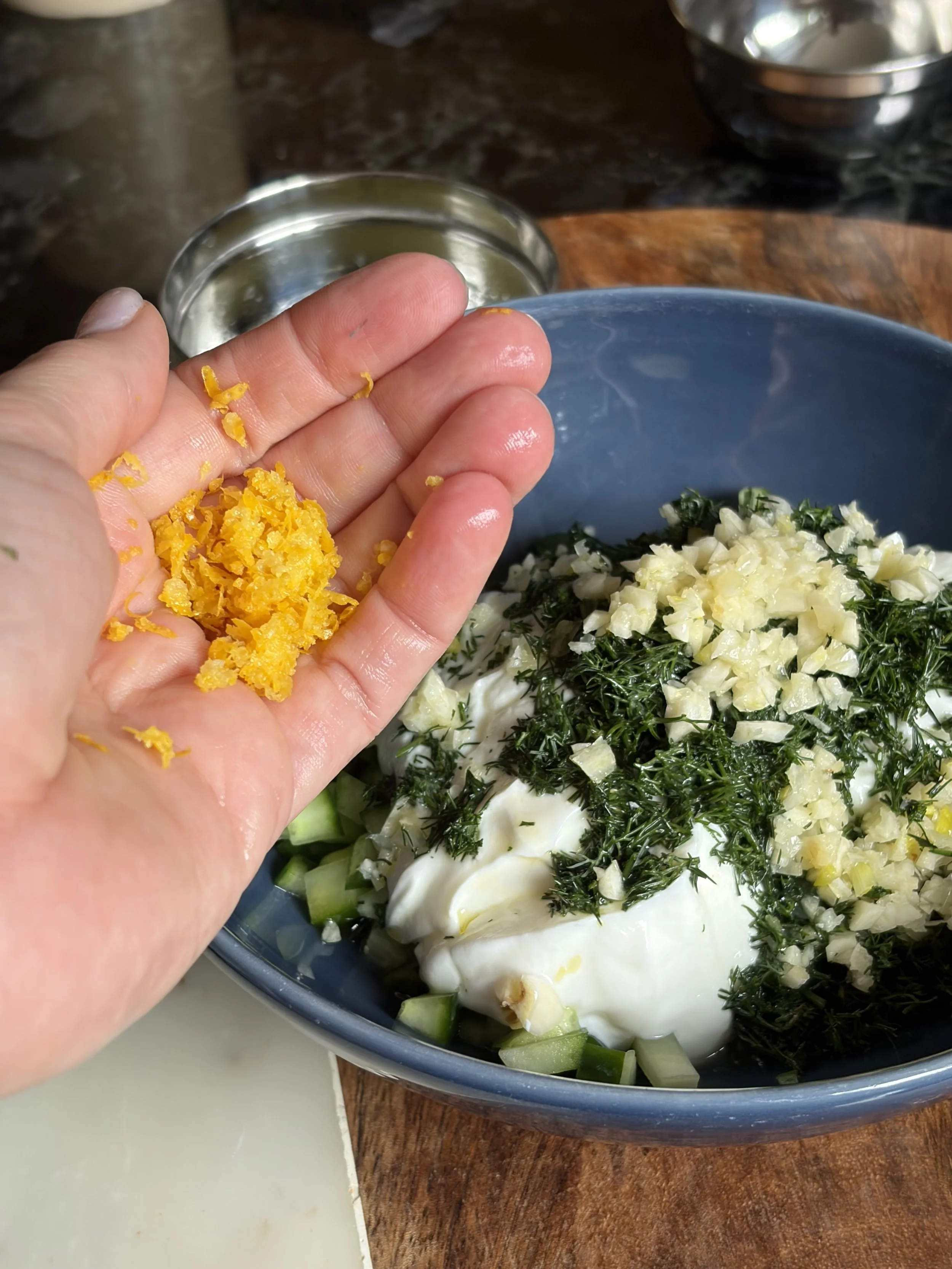
4. Use Fresh Lemon Juice and Zest
Fresh lemon juice provides acidity, while the zest adds a more pronounced lemon flavour.
Using both gives the sauce a bright, fresh taste.
When zesting the lemon, remove only the coloured outer layer of the peel. The white pith underneath can taste bitter.
5. Finely Mince the Garlic
Raw garlic has a stronger flavour than cooked garlic, so finely mincing it helps distribute that flavour throughout the sauce.
If you prefer a milder garlic flavour, start with a little less and adjust to taste.
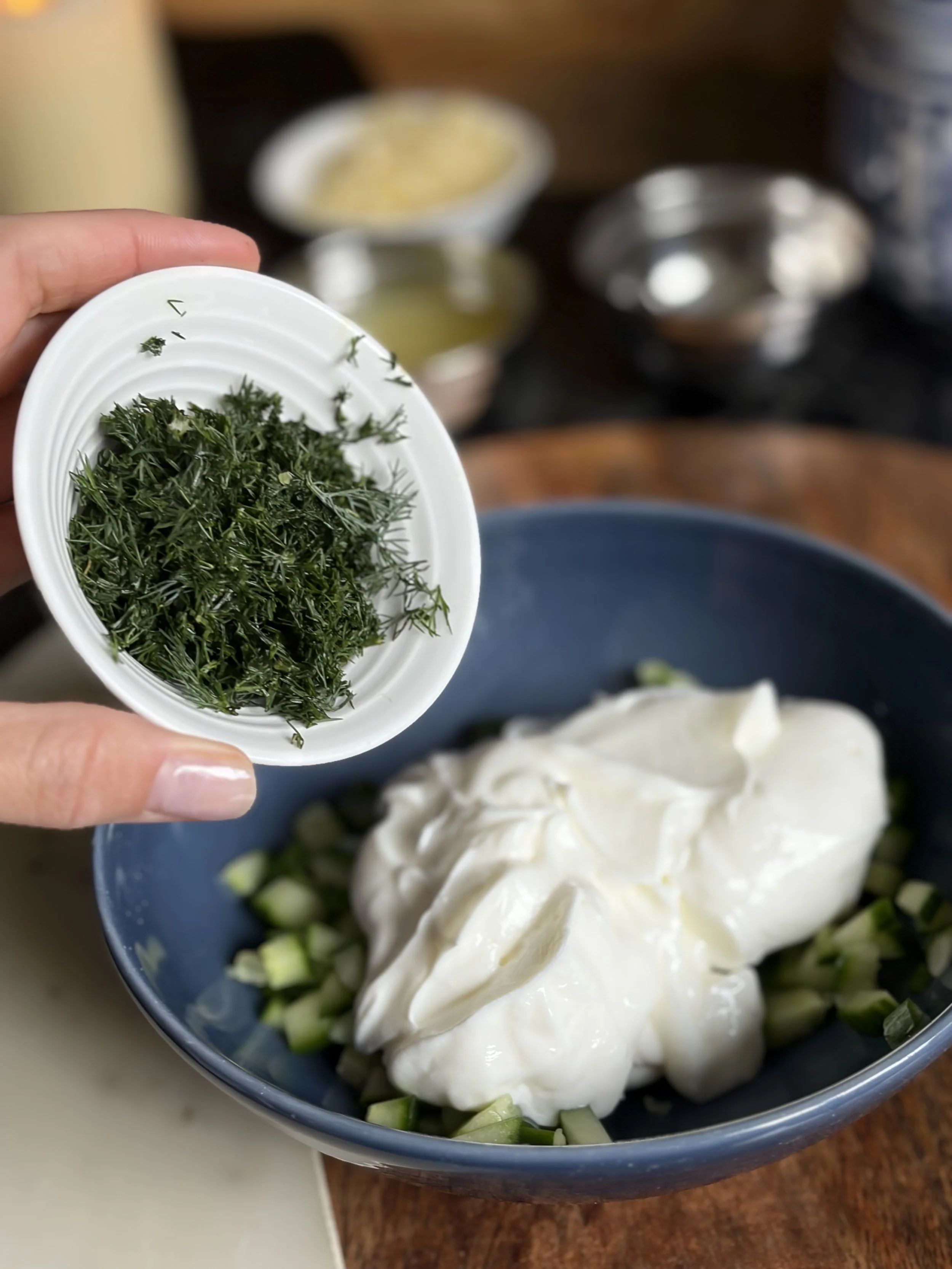
6. Use Fresh Dill
Fresh dill adds a light, herbal flavour that works especially well with cucumber and lemon.
Dried dill can be used in a pinch, but the flavour and texture won't be quite the same.
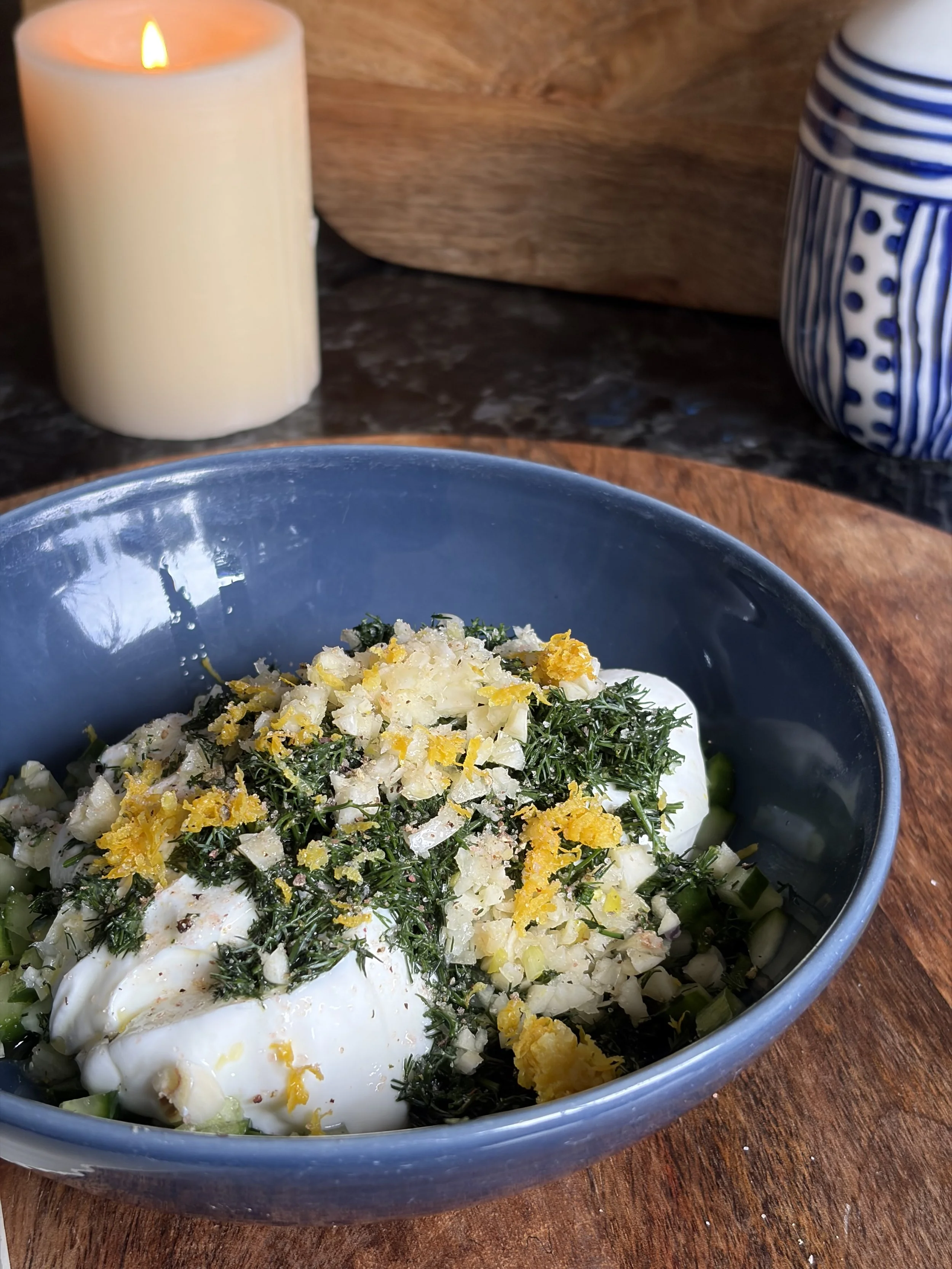
7. Let the Flavours Come Together
Although tzatziki can be served immediately, allowing it to rest in the refrigerator for about 30 minutes gives the flavours time to develop.
The garlic and dill become more evenly incorporated, and the lemon flavour settles into the yogurt.
8. Stir Before Serving
It's normal for a little moisture to collect on the surface of homemade tzatziki, especially after refrigeration.
Give the sauce a gentle stir before serving to bring everything back together.
Frequently Asked Questions
What Is Tzatziki Made Of?
Tzatziki is typically made with yogurt, cucumber, garlic, olive oil, and herbs.
This version also includes fresh lemon juice, lemon zest, dill, salt, and black pepper for additional flavour.
Can I Use Regular Yogurt Instead of Greek Yogurt?
Yes. This recipe calls for plain yogurt, so either regular or Greek yogurt can be used.
Greek yogurt will produce a thicker sauce, while regular plain yogurt will give you a slightly thinner consistency.
Be sure to use unsweetened yogurt.
Do I Have to Peel the Cucumber?
No. English cucumber has relatively thin skin, so peeling it isn't necessary.
Leaving the skin on also adds a little colour and texture to the finished sauce.
If you prefer a smoother consistency, you can peel it before dicing.
Why Do I Need to Remove the Cucumber Seeds?
The centre of the cucumber contains a lot of moisture.
Removing the seeds helps prevent the tzatziki from becoming watery, especially after it has been stored in the refrigerator.
Why Is My Tzatziki Watery?
Tzatziki can become watery if the cucumber releases excess moisture or if the yogurt is relatively thin.
To help prevent this, remove the cucumber seeds and gently pat or squeeze the diced cucumber dry before adding it to the sauce.
Using thick Greek yogurt can also help.
If liquid collects after refrigeration, simply stir the sauce before serving.
Can I Make Tzatziki Ahead of Time?
Yes. Tzatziki is a convenient make-ahead sauce.
Preparing it in advance allows the garlic, dill, and lemon flavours to develop.
Keep it covered in the refrigerator until you're ready to serve.
Can I Use Dried Dill Instead of Fresh?
Yes, although fresh dill is recommended for the best flavour.
Dried dill has a more concentrated flavour, so you'll need considerably less than the amount of fresh dill listed in the recipe.
Start with a small amount and adjust to taste.
Can I Make Tzatziki Without Garlic?
You can omit the garlic if you prefer a milder sauce, although the flavour will be different.
The cucumber, lemon, and dill will still provide plenty of freshness.
Is Tzatziki Served Hot or Cold?
Tzatziki is traditionally served chilled or cool.
It's especially good alongside warm foods such as grilled meat, roasted vegetables, and fresh pita bread.
What Can I Serve With Homemade Tzatziki?
Tzatziki works well with a variety of dishes, including:
Warm pita bread or pita chips
Grilled chicken or beef
Roasted vegetables
Rice bowls
Fresh vegetable platters
How to Store Homemade Tzatziki
Refrigerating
Transfer the finished tzatziki to an airtight container and store it in the refrigerator.
For best freshness and texture, enjoy it within approximately 3–4 days.
Because the sauce contains fresh cucumber and dairy, keep it refrigerated and avoid leaving it at room temperature for extended periods.
Can You Freeze Tzatziki?
Freezing isn't recommended for this recipe.
Yogurt can separate after thawing, and the cucumber may release additional moisture, leaving the sauce watery or grainy.
For the best consistency, prepare it fresh and store it in the refrigerator.
What to Serve With Homemade Tzatziki
One of my favourite ways to use this sauce is with homemade Sheet Pan Beef Kofta.
The cool cucumber and yogurt balance the warm spices in the beef, especially when everything is served together in pita bread.
For a complete homemade meal, I like pairing it with:
Seasoned ground beef with fresh parsley, mint, garlic, and warm spices, baked on a sheet pan and sliced for serving in pita bread.
Homemade Hummus
A creamy, savoury spread that works well alongside tzatziki and warm pita bread.
Homemade Tabbouleh
A fresh, herb-filled salad that adds brightness and texture to the meal.
These recipes work well together, and preparing the dips and salad ahead of time makes assembling dinner much easier.
A Simple Homemade Sauce Worth Keeping on Hand
Homemade tzatziki is one of those recipes that's easy to prepare but adds a lot to a meal.
With its creamy yogurt base, fresh cucumber, garlic, lemon, and dill, it brings a cool, refreshing contrast to grilled meats, warm pita bread, and roasted vegetables.
Whether you're serving it as a dip or adding it to homemade beef kofta wraps, it's a versatile recipe that comes together with just a few simple ingredients.
Recipe Notes
Yield: Approximately 2 cups, depending on the yogurt and cucumber used.
Yogurt: Greek yogurt produces a thicker sauce, while regular plain yogurt gives a lighter consistency.
Cucumber: Remove the seeds and dice finely to help prevent excess moisture.
Garlic: Freshly minced garlic provides the best flavour. Adjust the amount to your preference.
Lemon: Use fresh lemon juice and zest for a bright, citrusy flavour.
Dill: Fresh dill is recommended.
Chilling: Refrigerate for approximately 30 minutes before serving to allow the flavours to develop.
Storage: Keep refrigerated in an airtight container and enjoy within 3–4 days.
Serving: Pair with pita bread, beef kofta, hummus, tabbouleh, or grilled vegetables.