
Soft, chewy homemade pizza dough with a golden, delicious crust!
There’s nothing quite like homemade pizza, especially when you make the dough from scratch! This easy homemade pizza dough recipe uses just six simple ingredients and creates a soft, smooth dough that bakes into a beautiful golden crust with a slightly chewy texture.
Whether you prefer a classic cheese pizza or love loading yours with all your favourite toppings, this homemade pizza dough is the perfect starting point. It’s easy to work with, can be stretched by hand, and makes enough dough for two pizzas. You can even freeze one portion for another pizza night!
One of my favourite combinations is Italian sausage, spinach, onion, roasted garlic pizza sauce, and freshly grated mozzarella cheese. It's absolutely delicious!
Why You'll Love This Homemade Pizza Dough
Made with simple ingredients: Just flour, yeast, water, sugar, olive oil, and salt.
Perfect for homemade pizza nights: Soft on the inside with a golden, slightly crisp crust.
Easy to work with: The dough becomes smooth and stretchy after kneading.
Freezer-friendly: Make two portions and save one for another day.
Versatile: Works with pizza pans, baking sheets, or a large cast iron skillet.
Recipe Details
Prep Time: 20 minutes
Rise Time: 1 hour 30 minutes
Cook Time: Approximately 20 minutes
Total Time: Approximately 2 hours 10 minutes
Yield: 2 pizza dough balls (enough for 2 pizzas)
Ingredients
2 teaspoons active dry yeast
1⅓ cups warm water (not hot)
1 tablespoon granulated sugar
3 cups all-purpose flour, plus a little extra for kneading
2 tablespoons olive oil
1 teaspoon salt
Instructions
Step 1: Activate the Yeast
In a large mixing bowl, combine the warm water, active dry yeast, and sugar. Give everything a gentle stir and allow the mixture to rest for approximately 5–10 minutes, or until the yeast becomes nice and frothy.
The water should be warm to the touch, but not hot. Water that's too hot can kill the yeast and prevent your dough from rising properly.
Step 2: Mix the Dough
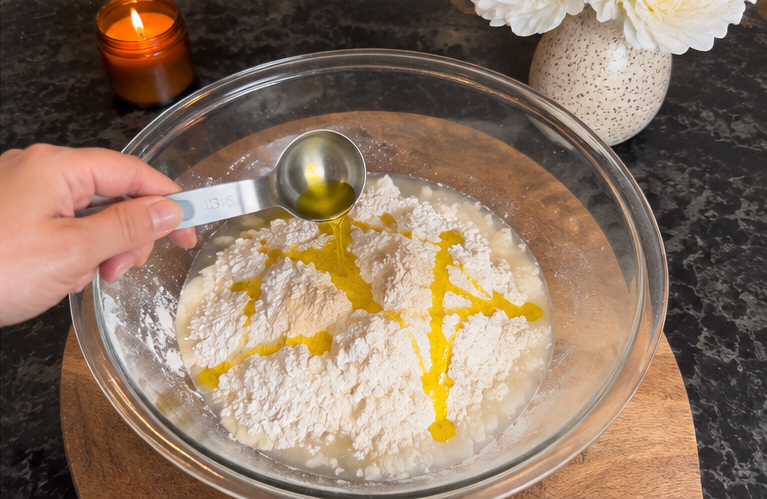
Once the yeast mixture is frothy, add 3 cups of flour, the olive oil, and salt.
Using your hands or a dough whisk, mix everything together until a shaggy dough forms. At this stage, the dough will look a little rough and may feel slightly sticky. That's perfectly normal!
Step 3: Knead the Dough
Transfer the dough to a lightly floured work surface or dough mat.
Knead the dough for approximately 10 minutes, adding a little extra flour at a time as needed to prevent sticking.
Continue kneading until the dough becomes smooth, soft, and elastic. It should feel slightly tacky but shouldn't stick excessively to your hands.
Be careful not to add too much extra flour, as this can make your pizza crust dry or tough.
Step 4: Let the Dough Rise
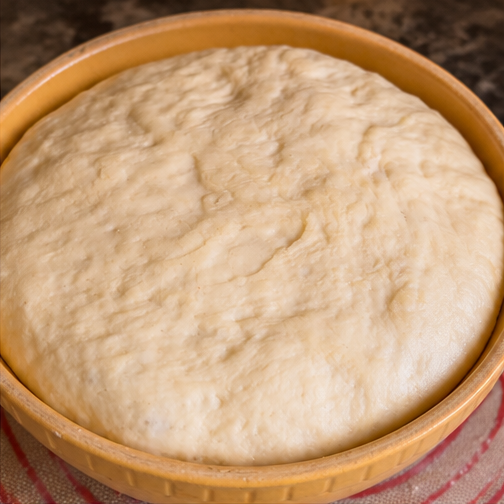
Shape the dough into a smooth ball.
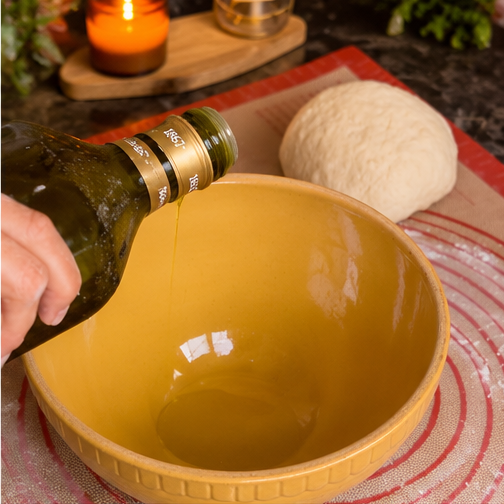
Lightly coat a clean mixing bowl with olive oil, then place the dough inside, turning it gently to coat the surface.
Cover the bowl with plastic wrap or a clean kitchen towel and place it somewhere warm and draft-free.
Allow the dough to rise for approximately 90 minutes, or until doubled in size.
My tip: I like to create a warm environment by briefly preheating my oven to around 105°F, turning it completely off, and then placing the covered bowl inside. Make sure the oven is off and has cooled to a comfortably warm temperature before adding your dough.
Step 5: Divide the Dough
Once the dough has doubled in size, gently punch it down to release the trapped air.
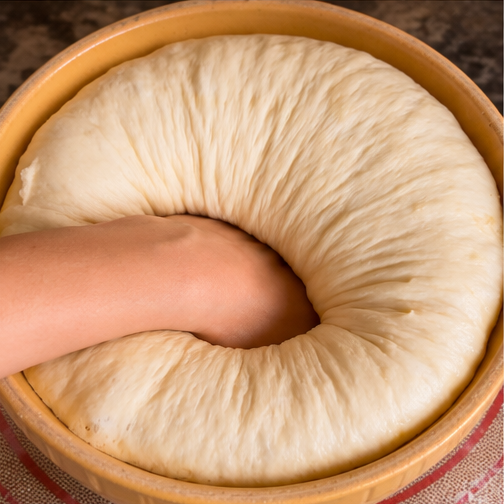
Transfer it to a lightly floured surface and divide it into two equal portions.
Shape each portion into a smooth ball.
At this point, you can use the dough right away or wrap it up and freeze it for another homemade pizza night.
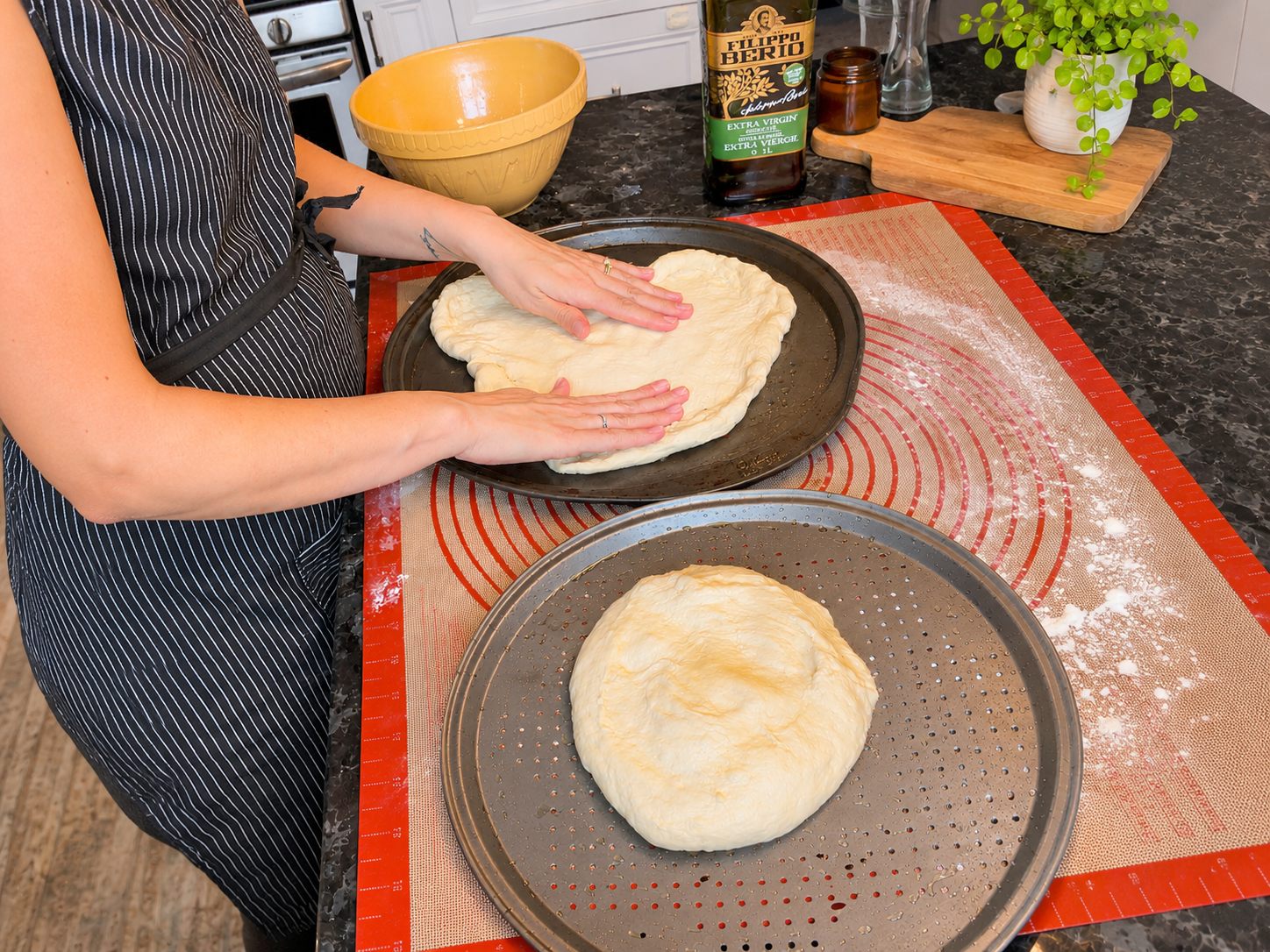
Step 6: Shape Your Pizza
Preheat your oven to 425°F (220°C).
Lightly grease your pizza pan, baking sheet, or large cast iron skillet.
Using your hands, gently stretch one ball of dough into your desired pizza shape and thickness.
If the dough keeps shrinking back while stretching, allow it to rest for 5–10 minutes before continuing. This gives the gluten time to relax and makes shaping much easier.
Step 7: Add Your Favourite Toppings
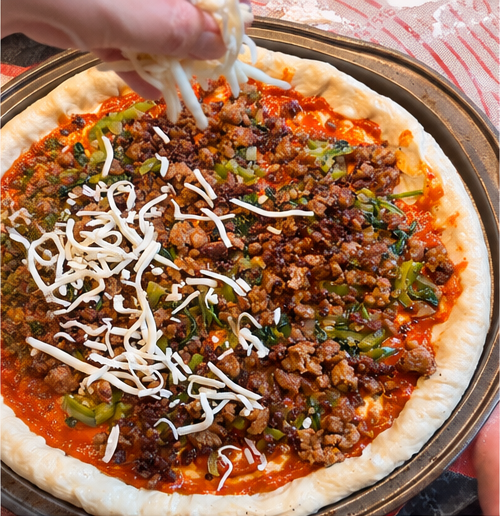
Spread your favourite pizza sauce evenly over the dough, leaving a small border around the edges for the crust.

Add your favourite toppings and finish with freshly grated mozzarella cheese.
Step 8: Bake
Place the pizza in your preheated 425°F oven and bake for approximately 20 minutes, or until the crust is beautifully golden brown and the cheese is melted and bubbly.
Baking time may vary depending on the thickness of your crust, the toppings you use, and your baking pan.
Remove from the oven, allow to cool for a few minutes, then slice and enjoy!
My Favourite Homemade Pizza Topping Combination
One of my favourite ways to use this homemade pizza dough is with Italian sausage, spinach, onion, roasted garlic, and mozzarella.
Here's how I like to make it:
Cook ground Italian sausage in a skillet until fully browned and cooked through.
Add some chopped onion and fresh spinach, cooking until the onion softens and the spinach wilts.
Mix a little roasted garlic into your favourite pizza sauce for extra flavour.
Spread the roasted garlic pizza sauce over your stretched pizza dough.
Top with the cooked Italian sausage, spinach, and onion mixture.
Finish with plenty of freshly grated mozzarella cheese.
Bake at 425°F for approximately 20 minutes, or until the crust is golden and the cheese is beautifully melted.
The combination of savoury Italian sausage, roasted garlic, and creamy mozzarella is so good!
Tips for the Best Homemade Pizza Dough
Use warm water, not hot. Water around 100–110°F is ideal for activating active dry yeast.
Don't skip kneading. Kneading develops the gluten, giving your pizza crust its soft, chewy texture.
Add extra flour gradually. A slightly tacky dough is better than a stiff, dry dough.
Allow the dough to double in size. Rising time can vary depending on the temperature of your kitchen.
Stretch the dough by hand. Hand stretching helps maintain the dough's airy texture.
Use freshly grated mozzarella. It melts beautifully and gives homemade pizza that delicious cheesy finish.
Don't overload your pizza. Too many wet toppings can prevent the crust from baking properly.
Can You Freeze Homemade Pizza Dough?
Absolutely! This pizza dough freezes beautifully, making it perfect for preparing ahead of time.
After the first rise, punch down the dough and divide it into two equal portions.
Lightly coat each dough ball with olive oil, then wrap tightly in plastic wrap and place in a freezer-safe bag or airtight container.
Freeze for up to 3 months for the best quality.
When you're ready for homemade pizza, transfer the frozen dough to the refrigerator and allow it to thaw overnight.
Before shaping, let the dough sit covered at room temperature for approximately 30–60 minutes, or until it's relaxed and easy to stretch.
Add your favourite toppings and bake as directed.
How to Store Pizza Dough in the Refrigerator
If you're planning to make pizza within the next day or two, you can also refrigerate the dough.
After the first rise, divide the dough into portions, lightly coat with olive oil, and place in separate covered containers with enough room for expansion.
Refrigerate for up to 2 days.
When ready to use, allow the dough to come closer to room temperature before stretching.
Frequently Asked Questions
Can I make this pizza dough without a stand mixer?
Yes! This recipe is made entirely by hand. A dough whisk can help with the initial mixing, but all you need is a mixing bowl, a clean work surface, and your hands.
Why isn't my pizza dough rising?
Your yeast may be expired, the water may have been too hot, or the room may be too cold. Make sure your yeast becomes frothy before adding the remaining ingredients.
Can I use this dough for thick or thin crust pizza?
Yes! For a thinner crust, stretch the dough farther across your pan. For a thicker crust, leave it slightly smaller and thicker. Keep in mind that baking times will vary.
Can I use a cast iron skillet to bake homemade pizza?
Absolutely! A large, lightly oiled cast iron skillet works wonderfully for homemade pizza and can help create a beautifully golden crust.
Do I need a pizza stone?
Not at all! You can make delicious homemade pizza using a regular pizza pan, baking sheet, or cast iron skillet.
Final Thoughts
Making homemade pizza dough from scratch is easier than you might think, and the results are so worth it!
With just a handful of pantry ingredients and a little time to rise, you can create a delicious homemade pizza crust that's perfect for all your favourite toppings.
Whether you're making a simple cheese pizza or loading it up with Italian sausage, spinach, roasted garlic, and mozzarella, this easy homemade pizza dough is a recipe you'll want to make again and again.
Happy baking!
Cynthia Madeleine From Scratch